

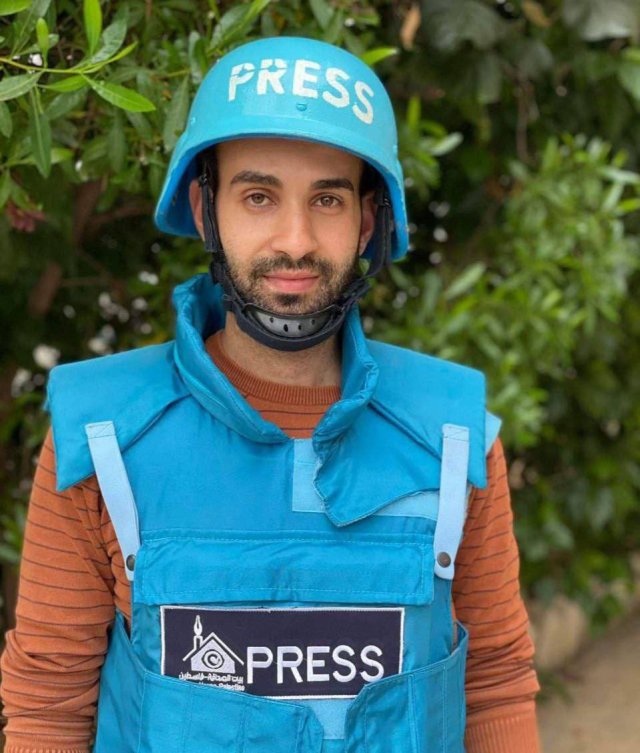
Since Israel’s full-scale assault on Gaza began in October 2023, the region has become the most dangerous place in the world to be a journalist. The Committee to Protect Journalists says that, as of May 21, 2025, at least 180 journalists and media workers have been killed in Gaza, the West Bank, Israel, and Lebanon, with 172 of them being Palestinian. Gaza’s Government Media Office puts the number of journalists killed by Israel in the enclave at 220 as of May 25, 2025. Additionally, 86 journalists have been imprisoned by Israeli forces. These are not accidents. These are systematic killings and detentions, acts of silencing that serve a wider imperial project of erasure, domination, and ideological control.
In 2024 alone, the Committee to Protect Journalists (CPJ) recorded 124 journalist deaths globally, marking the deadliest year since the organisation began tracking such data in 1992. This figure represents a 22 percent increase from 2023 and surpasses the previous record of 113 deaths in 2007 during the Iraq War. Nearly 70 percent of these deaths occurred in Gaza, with Israel responsible for at least 85 journalist killings, including 82 Palestinians. This sharp rise is not coincidental—it reflects a global intensification of repression, particularly in conflict zones where media workers challenge imperial narratives and expose war crimes.

Beyond the staggering death toll, journalists in the region have faced a multifaceted campaign of repression. Since the onset of the conflict, CPJ has documented 86 arrests of journalists in Israel and the Palestinian territories, with many still detained as of May 2025. These arrests are often carried out without formal charges and are accompanied by reports of assaults, threats, cyberattacks, and censorship. Such tactics are designed to intimidate and silence journalists, further restricting the flow of information from the region.
The victims include seasoned war correspondents, photojournalists, radio hosts, and young citizen reporters armed only with mobile phones. These are the workers tasked with documenting genocide. Their targeting sends a chilling message: the truth is a threat, and those who speak it will be punished.

Western media and political elites often reduce these deaths to “tragic consequences” of war or “unintended collateral damage.” This framing minimizes the intentionality behind the targeting of journalists and obscures the systematic nature of these attacks. As noted by Assal Rad in the Al Jazeera Journalism Review, major Western media outlets have largely ignored or downplayed findings that nearly 70 percent of journalists killed in 2024 were targeted by Israel, highlighting a troubling double standard in the West’s commitment to press freedom. This is not just about suppressing a story; it is about controlling the narrative, the discursive terrain on which legitimacy, victimhood, and violence are defined.
What underpins these killings is not just military strategy. It is class, empire, and control over ideological production. The Palestinian journalist, particularly one working independently or with grassroots media, represents a rupture in imperial narratives. They speak from the frontline of occupation, from refugee camps, from crumbling homes under siege. They do not report from the safety of a Tel Aviv hotel or a European newsroom. They report from beneath the rubble, and in doing so, they expose the operations of power.

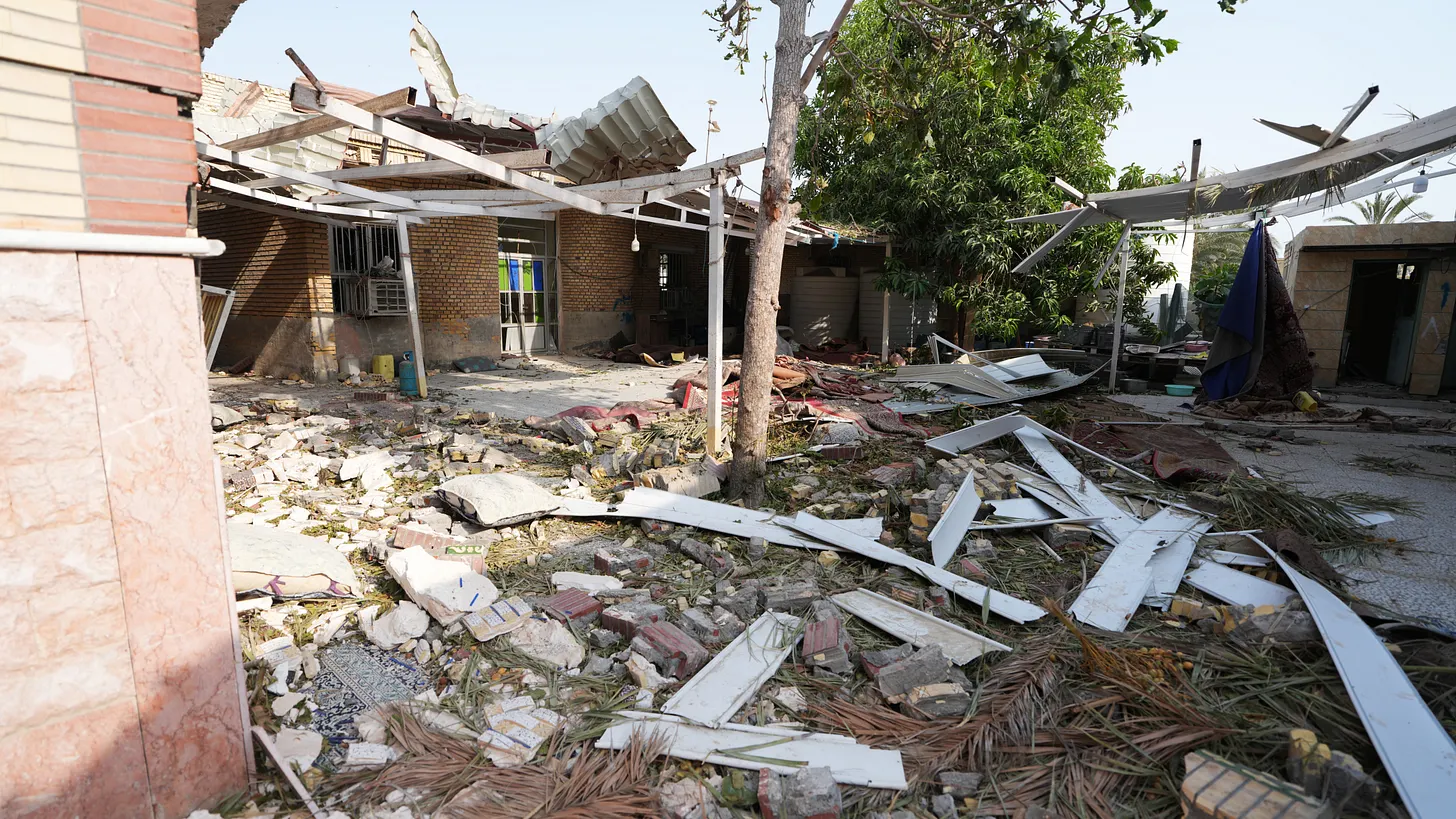
As described in horrifying detail in a May 24 Guardian article written from Jerusalem, the Israeli state, fully backed by the United States and its allies, has increasingly turned to the eradication of civilian infrastructure, including schools, hospitals, and news agencies, under the guise of military necessity. But as the death toll of media workers makes clear, this is about more than military targets. It is about ideological warfare. The aim, as explained by Guardian Diplomatic Editor, Patrick Wintour is to silence resistance, neutralise documentation and consolidate a narrative of settler innocence and Palestinian aggression.
Meanwhile, international institutions that purport to protect press freedom have failed to hold Israel accountable. The United Nations has issued a statement referencing “grave concern,” but the machinery of imperial diplomacy remains intact. As bombs fall, arms deals proceed. As explained by the Australian Centre for International Justice, Australia continues to export military components to Israel. The global architecture that props up Zionist colonial violence remains unshaken, and journalists pay the price.

The Machinery of Consent: Media Control and Imperial Power
To understand the global response, or lack thereof, to the execution of Palestinian journalists, we must interrogate the broader structures of ideological production. As Marxist theory reminds us, ruling class dominance is maintained not only through force, but through consent. The media, particularly in imperialist core states like the United States, Britain, and Australia, functions as a key mechanism of this consent. It is the terrain on which legitimacy is manufactured, where violence is justified, and where the enemy is defined.
Noam Chomsky’s analysis of propaganda in liberal democracies offers a vital lens through which to read the erasure of Palestinian journalists. In his pamphlet, Media Control, Chomsky outlines how the corporate media, far from being independent or adversarial, operates as a system of elite consensus, a tool for manufacturing consent among the population in service of imperial power. The media “diverts the public from what is really happening,” he writes, instead framing events through ideological filters designed to support the interests of corporate and military elites.
This logic is clearly visible in the case of Palestine. The disproportionate killing of journalists is framed as a regrettable accident or omitted entirely. The focus shifts to “Hamas rocket fire” or Israeli “self-defence,” constructing a moral equivalence between coloniser and colonised. Meanwhile, Palestinian voices are excluded or tokenised, their testimonies questioned, and their deaths rendered passive bodies rather than political actors.
Chomsky notes that the function of propaganda in “free” societies is not to impose censorship directly, but to set the bounds of permissible debate. Within this framework, Israel’s bombardment of Gaza is not questioned in moral or legal terms; it is debated only in terms of tactical prudence or international fallout. The genocide of Palestinian civilians and the murder of journalists becomes part of the “background noise” of empire, normalised, depoliticised, and personalised.

Under capitalism, the media are not neutral institutions but industries owned and controlled by monopolies. These monopolies, whether Murdoch’s empire, CNN, or the ABC, are structurally aligned with capital and the state. Their role is to ensure that ideological reproduction aligns with the interests of the ruling class, including its military alliances, arms trade, and colonial projects.
When Palestinian journalists are killed, and Western journalists remain silent, or echo the lines of state and military PR departments, they are not simply failing in their duty. They are performing their class function. Their silence is not incidental; it is instrumental.

Thus, the killing of journalists is not only an attack on truth but on the revolutionary potential of the working class to understand and act on that truth. The ideological monopoly upheld by Western media ensures that the Palestinian resistance is framed as terrorism, not anti-colonial struggle; that death in Gaza is a tragedy, not a war crime; that silence is neutral, not complicit.
To challenge this system, we must build counter-hegemonic media rooted in the experiences of the oppressed. Palestinian grassroots media, community radio, social media activists, and independent networks are already doing this. But they are fighting an asymmetrical war not only against tanks and bombs, but against algorithms, narrative control, and the slow suffocation of public attention.

What is required is not just solidarity in mourning but solidarity in struggle, a struggle to break the monopoly of imperialist media, to promote revolutionary journalism, and to ensure that the voice of the oppressed is not merely heard but amplified as a weapon of truth.
And yet, despite this onslaught, Palestinian journalists continue to report. They document, livestream, translate, and archive. They upload from smartphones while burying their colleagues. They challenge the narrative monopoly of imperialism not with abstract theory, but with blood, image, and word. They are not just casualties of war; they are agents of revolutionary memory.

To mourn them is not enough. We must study why they were killed and by whom. We must ask: whose interests are served when truth is buried beneath rubble? What class forces are defended when silence is enforced through airstrikes? What kind of global system demands the execution of the witness?
The killing of Palestinian journalists is not a “press freedom issue” in the liberal sense. It is the cutting edge of a global system that annihilates truth to protect power. In honouring these journalists, we affirm that liberation will not come from within imperial institutions but from struggle. Their final broadcasts are not just records of suffering; they are calls to action.


Leave a Reply