
This is an abridged and slightly edited presentation by Bert De Belder of the Workers’ Party of Belgium (PTB-PVDA) in Melbourne at the end of 2024. He spoke on the theme Building Revolutionary Parties Inside Imperialist Societies: Practices from Australia, the U.S.A. and Belgium. Bert spoke alongside Party for Socialism and Liberation (PSL) leader Sanika Mahajan. After the presentations, there was a brief discussion, some of which we reproduce here.
It’s really a pleasure to be here and to be connected to Australia and the United States. I’m representing the Workers Party of Belgium, better known as PTB in its French acronym. The PTB didn’t start as a traditional or classical Communist Party, but as a Maoist-oriented party in the 1960s student movement. We tried to connect with the working class in our early stages but remained for a long time a small cadre party with a core of very dedicated militants, but with relatively little impact on the society at large, the working class, and class struggle.
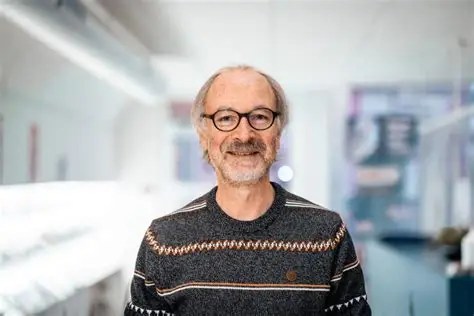
In the early 2000s, we had an inner party crisis after we failed in the elections and were even losing votes because of wrong tactics. We made an internal reflection and debate and also made a survey among our basic party members and among sympathisers and voters. There, we came to the observation that we were acting in a too dogmatic and sectarian way and that we were too self-righteous instead of trying to work with the people, learn from the people, and build our party starting from their concrete concerns, desires, and the level of consciousness and organisation they were willing to start from.

In those years, with the party crisis we had, we made the choice to renew our party, and we worked with the new leadership and a new orientation towards our Congress in 2008, which we called afterwards our “Renewal Congress”. That Congress centred around 3 pillars, namely, to remain a party based on Marxist principles, but also becoming a more flexible party, a more accessible party, a more open party, and thirdly, to really become the party of the working class.
A principled party meant that in a rapidly changing world – and today, of course, we see that these changes are more profound and more rapid than we could have expected even a couple of years ago – a party that wants to lead to the working class and lead the class struggle needs to have a strong backbone. Of course, our backbone is our Marxist analysis and commitment to a socialist project of society. That is what defines our identity as a party.
At the same time, we needed to become more open, more flexible, and more accessible. We need flexibility and openness to connect with the reality of the people and to adapt to the concrete conditions in which the party operates in an advanced capitalist society, as in Belgium and Western Europe. This is in contrast with the rigid party that doesn’t adapt to concrete and changing conditions, both politically and organisationally.
On those axes – politics and organisation – we made some adaptations in our tactics and approach to try to find the most suitable path and methods to make progress in the direction of our long-term goal of socialism. We are not going to move forward by overwhelming people with our big truths and our entire agenda and programme. But to go step by step, starting from the level the people find themselves, and to inspire by moving both the mind, heart, and soul of the people.
In our name – the Workers Party of Belgium – you would suppose that we are really the working-class party. In fact, we remained, to a large extent, a party of intellectuals, of people with petty bourgeois origin, students, teachers and so on, with little connection with the working class in the main industrial sectors, public services and trade unions that represent the working class in their daily life and struggles. So, we made the decision that we should take more steps and exert more efforts to become a genuine working-class party.
Through our 2008 Renewal Congress, the Solidarity Congress in 2015, and 2021 Unity Congress, we deepened our analysis and our orientation to become a party of the working class and also a party of the youth. As [Party for Socialism and Liberation leader] Sanika Mahajan explained, youth movements are important, and to have youth cadre in the party is an important battle for us. We strengthened our youth organisations: COMAC for students, Red Fox for youth, and pioneers for children.

We also said that we would become a better organised party with a three-tiered approach to party membership. We have a general membership of what we call consultative members; these are actually about 28,000 people who have a party membership card but who are not organised in basic party groups. Our second level of organisation are organised members who have a monthly meeting in a basic party group, and they have their own projects, their own objectives and their own dynamics. The third tier of membership are the party militants – previously this was the only party membership we had. Party militants have higher level of commitment and investment of time, energy and resources in party work.
We also changed our way of communications and developed a much more open way of communicating. We embrace, of course, new technologies, social media design, videos, visuals – a much more colourful, open and optimistic way of communicating than just dropping our main slogans over the heads of people.
Finally, what we are still developing now, and especially with the huge changes on the international level that we see before our eyes, we want to become a more internationalist party and [develop] the anti-imperialist axis of our work and proletarian internationalism. This is all also exemplified by the latest book of our Secretary General, Peter Mertens, whose new book – which is also available in English – is called Mutiny: How Our World is Tilting. The working class is an international class, is an internationalist class, and proletarian internationalism and anti-imperialism are necessary orientations to be able to push the revolutionary forces forward and to come closer to the socialist society that we are striving for.

Raise Consciousness, Organise and Mobilise
One of the methods of work that we use to build our party and to advance with our party is often described as to “arouse, organise and to mobilise the people” – or we say it with the acronym SOM: to ‘sensibilise’, to organise and to mobilise. The first, the S, is sensibilisation or conscientisation or raising consciousness. Raising awareness is to say that people learn through their own experiences. They can learn in different ways, but experiences acquired through social collective action are, of course, the richest experiences. But we also, as a Marxist party, we need to introduce Marxist ideas in those social actions, in those class struggle experiences.
We have to be firmly rooted among the basic masses, among the working people, and start from their own immediate interests to build something. To build something means to organise – the O of SOM. Collective action is an important venue for people to get together to get organised, to surpass themselves, and to see that collective action is stronger than individual action. For that they need permanent forms of organisation such as mass organisations, but the highest form of organisation is, of course, the Marxist-Leninist Party.
So, it is necessary for the party to broaden and to strengthen itself, both in a quantitative way and in a qualitative way. That is why we introduced those 3 tiers of membership, because quantitatively we now have 28,000 members, but qualitatively there’s a lot of work to be done to ensure the Marxist backbone of the party and to have a strong militant membership core of the party – that is one of the challenges we are confronting nowadays.
The third letter of SOM is mobilise. This of course means not just mobilise for any action or activity, but mobilise in the sense of developing and leading the class struggle, starting from the working class. We do that in different ways. There are petitions, meetings, popular assemblies, strikes, occupations, demonstrations and so on, but we want to develop these actions and these ways of mobilisation in a broad way. We are a party of doers, an action party. Of course, theory is important, but if theory is detached from the concrete action on the terrain in the field, it will not serve a larger purpose of building the party and advancing the revolutionary forces.
As a party of doers, the action that we develop is both on the local, national, and now more and more on the international level. On the local level, we develop many local projects, and basic party groups often have their own local projects based on the concerns of the people, of the community, like fighting the rise of the price of garbage bags by the municipality or fighting to have longer opening hours of the local swimming pool. Instead of speaking immediately about socialism, anti-capitalism, and all that is wrong in this society, [we focus on] the main concern of the people, and at the time the main objective that we fought for at a local level was to have cheaper garbage bags for the people. So, when we just started our renewal process, we were known as the party of the garbage bags.
We also have national campaigns that also start often from the very basic concerns of the people. For instance, we had a campaign to lower the value-added tax on electricity bills. Electricity in Belgium was taxed with a value-added tax of 21%, which is the same as all luxury goods. We made campaigns using visuals, videos, and posters where we compared caviar that is taxed 21%, with electricity, also 21%. We asked: is caviar a basic necessity or is electricity a basic necessity? We gathered hundreds of thousands of signatures. We brought it to Parliament, fought for it with the trade unions, and obtained the lowering of the tax on electricity to 6%. Local party groups, basic party groups, can choose to develop their own local projects or take on a local scale a national campaign that is nationally presented to them.
It is important to mention one of the positive elements that we have kept from our early years is Medicine for the People; a network of people’s clinics of community health centres in 11 working-class communities in Belgium that cater to the local people, to the working class in their neighbourhoods with free and top-quality healthcare and other social services.
Apart from what the party does at the local level as projects and concrete actions, we also have the mass organisations I already mentioned, COMAC, Red Fox, and pioneers for students, youth and children. We also have a women’s movement, which is called Zelle, that is also growing, and an international solidarity and anti-imperialist mass movement called Intel, which stands for International Action for Liberation.
I would also like to mention our annual international solidarity festival, which is called ManiFiesta. We have organised this 14 times already at the seaside in Ostend. There, we gather with trade unions and social movements, with international guests and invitees, with many international organisations, parties and movements to celebrate international solidarity, to debate, exchange and learn from each other.

It’s good that we are together here with three different parties from three different continents, learning from each other and not pretending to have all wisdom yourself, but that you should remain humble even if you make advances; you still need to learn from each other and be humble about your achievements and be open to correct and to learn and to add from other experiences.
Electoral Successes
We participate in the bourgeois parliamentary and local elections because we think we can, on the one hand, expose some things of how the system works and functions, but also obtain some things through that process of implicating ourselves in elections and in Parliament. Since our renewal process started in 2003, we got our first two Members of Parliament in the Federal Parliament of Belgium in 2012. Now we have 50 Members of Parliament in the different regional parliaments that Belgium has. In the federal parliament, we have 15 out of 150 Members of Parliament and also have two MEPs – members of the Parliament inside the Group of the Left in the European Parliament.
We have doubled our number of elected representatives in Flanders amid strong gains also in Brussels and Wallonia – the three regional parts of Belgium. Last October there were local elections all over Belgium, and we concentrated our forces and ambitions in some 70 municipalities and have gone from 170 to 260 local representatives elected in those local elections.
In some places we got quite impressive results. In the city of Antwerp – the second largest city in the country – we had 22% of the vote. Previously, we were only present in two small municipalities in the north of the country in Flanders, but now we have been able to form local coalition governments in three major municipalities in Brussels and in the South in Wallonia. We now have eight aldermen or executive councillors, part of the local community government responsible for housing, youth and social services. So, we now have important responsibilities in several towns and cities in Belgium.
Of course, this is not our main objective or main form of struggle. We try to see our parliamentary work in the way of what we call “Street Parliament”. We start from the streets, from the concerns and the people in their communities, from their local actions, national actions, their class struggle, their trade union struggles, and we bring those issues into the Parliament. We fight for them in Parliament, and then we go back to them and say, “yes, in Parliament we have been able to achieve this or that” or, to the contrary, “we have not been able to achieve it because the system is not in favour of the trade union concerns, the working class concerns, so you will have to fight more in the streets”. So, we call it Street Parliament.
Three Lessons
I would like to conclude with three important ideas that we hope to promote and to take on in the months and years to come for ourselves, but also for the broader left in Europe and worldwide.
The first idea we are trying to advance is that the Left must offer hope and perspective. We should stop always complaining and always saying how weak the Left is, how fragmented we are, how difficult it is, and how strong the enemy forces are. No, we have to start from the strength of our own convictions, from the strength of our project for society that is socialism, and of the knowledge and the confidence that we will reach it if we fight, if we grow, if we take on the class struggle and the party building in a correct, modern way that is adjusted to the conditions of time and place.
We think that people want to be part of the wave of history if we give them the chance, if we orient them towards that, if we take them seriously, if we are proud of our parties and of our project for society, and if we make the working class proud of itself and of its achievements and its perspectives.
The second idea is that of the working class and the centrality of the working class. As I explained, we have had a battle with ourselves to become or to start becoming a real, genuine working-class party. Part of that means also that you must work to have working-class people in the leadership bodies of the party. Also, the social composition of the party as a whole, but also of the leading bodies of the party, is important. Since we started this process of integrating more cadre from working-class origins or still working in factories, in public services, there is a change in the way we, as leading bodies, act and try to advance the party. So, the working-class presence and also the presence of youth cadre up to the leadership bodies of the party are important.
And we try to see the broader issues like anti-imperialism, anti-racism, anti-sexism, also starting from a working-class perspective. How does the working class feel about those issues? How can they advance on those issues? Because there is, of course, a lot of cultural hegemony of the reactionary forces of the big bourgeoisie, internationally with Trump and Steve Bannon, etcetera, but also nationally, where we also have a strong Right and Ultra-Right, far-right and fascist forces in Belgium.
So, in our tactical and communicational approach, we have to start from where the working class finds itself today and, step by step bringing education, a discussion, and work with them; advance with them from a working-class perspective, but without giving up principles of anti-imperialism, anti-racism, anti-sexism, and so on.
The third idea is internationalism. To internationalise our party: in our worldview, in our actions and campaigns. Of course, we are also very much involved in the Palestine solidarity movement. We are also one of the leading forces within the party, but also with our mass movements in the Palestine solidarity movement in Belgium, which tries, with a certain amount of success, to integrate also the major trade unions, major social movements, climate movement, etc. But we need to do more on anti-imperialism and on international solidarity, especially in this world, full of important changes now, but also full of elements of mutiny, of resistance, of rebellion, both in the North and the South.

We think we need to connect more with the forces of the Global South and learn from them and put the struggle of decolonisation and anti-imperialism more to the forefront of our struggle. We think that with those elements we have a project that will serve the working-class long-term project that is socialism based on the working-class perspective and with an internationalist worldview and action. That we can move forward in the direction that the people and the planet so desperately need, and that is of course in the direction of socialism.
Post-Presentation Discussion
Question One: When you have members in parliament, or in positions where you are governing, how do approach managing capitalist government affairs but at the same time not compromising on political principles? How do you maintain democratic structures inside a large party?
Question Two: The problem that a lot of Australian parties face is that everyone is just small, and there seems to be a problem growing. At what stage of development did your party reach before starting projects like a medical centre – something which would completely consume a small organisation in Australia?
Question Three: What has been the impact of reactionary right-wing forces attacking your party? How have you responded to these attacks?
Thank you for the questions. And I think it’s a very rich experience and discussion that we have here.
On the question of local city councils or municipality councils, and whether that doesn’t lead automatically to becoming integrated into the system.
Of course, we have to be aware of that risk, and we want to. That’s also why we choose our candidates who are on a local electoral list and also choose our comrades who are in eligible positions on that list. Or that could become members of an executive at the local government [level].
But we think that’s on the local level. There are some things we can achieve. In the three cities I mentioned, we are in collaboration in coalition governments with the Social Democrats and/or with the Green Party, which are of course not communist or revolutionary parties.
But on some local issues we can find sufficient common ground to have a common local government programme. We try to negotiate and to fight for our issues and our approaches inside that common programme.
And also, with the competences we get in the division of tasks and responsibilities among the local government officials, we try to get to those, as I mentioned, like housing, youth, equal rights, women’s rights that are closest to our programme and concerns and on which we can make a difference. So, while being in a local government coalition, first we want to be loyal to the common programme that we negotiated and not always say we are different than the two other coalition partners. Because you stepped into a coalition government, you have to be loyal to that. But at the same time, we make our own mark on it.
That does not mean that we have no contradictions with those other parties, especially on their national and regional levels, sometimes less at the local level. So, we have to guard against being identified with the Social Democratic and Green parties; no, we are we are the Workers Party of Belgium, and we remain with that same identity also at the local level. But at the local level, we can cooperate, collaborate with other forces, including Social Democratic and Green-ecologist forces, to obtain some things for and with the people at the local level.
As to the question of inner-party democracy, with the entire system we have, the third level of membership, the consultative members, is different [from other parties’ structures]. They can just buy their membership card online and are not integrated in the party structures, with the basic party groups, and with the militant core, and with the communist core of the party. They don’t have voting rights and cannot be eligible for voting at party congresses, for instance.
But for the 3,000 or so organised members we have and the 1,000 or something militants we have, it is different. We function according to democratic centralist principles. And that’s also the way we elect representatives to go to the party congresses. There are party congresses per year with commissions, with discussions, with debates, amendments, with changes in the proposed resolutions, etcetera, in a very democratic way, but once, in the most democratic way, you have had all elements of the debate done, you come to conclusions.
Of course, you cannot have a force that can strike, that can obtain victories if you are not united in how you will execute the decisions that have been democratically taken. So, from that moment on, we are a centralised party that has the same programme, the same campaigns, the same way of obtaining victories and waging struggles, but also adapted to local conditions, and not every base party group has to automatically accept every party campaign that has been centrally decided. As I explained, some may prefer to have their local project because they have an important swimming pool or bus stop or garbage bag campaign running – and they cannot do both at the same time without over-asking their members. So that’s the way we organise our democracy.
On the question of how to grow when you are still small and where to go to start. Well, that’s of course a complex question, and I don’t have a ready-made answer to that. I think what is important is that you focus first on some areas or some communities and take on a specific campaign.
I think it’s maybe not the best idea to be present everywhere with very small groups of people, but to focus on several areas and with a specific campaign, and try to start from what is really a major concern in that area and start from there with the focused programme, project, or campaign proposal.
Something that I haven’t mentioned but that is important since our renewal process. We often start with a survey: we go door to door, or we send out a survey through social media in a certain area. Before we start our election programme, we also start with a massive survey. For the last national elections, we had the survey filled out by 110,000 people, and that serves partly to define the priorities in our election programme. That could be done at a local level, to really survey what are the basic social and political concerns, or wishes, or perspectives that the people in an area have, and try to start from that with a small campaign, a small action, and try to build from that.
Well, for us, where we stand now, we have been building our party with the twists and turns, amid errors and with rectification movements for what is it now, 70 years or so. Of course, it’s not a one-shot or a ready-made answer. It’s trying to find your own way, but I would suggest starting focused in terms of the territory, in which areas to start building something serious, something strong, something really rooted in the communities. And focus on which campaign or which issue you take in hand — not try to have answers and campaigns on every issue, local, national, and international, that presents itself.
And of course, as mentioned by all speakers here, the Palestine question and the Palestine solidarity movement is a major and a very important issue that, in many communities, can be a good starting point. But not everywhere, because in our experience in some more traditional working-class communities, with small migrant communities and traditional Belgian working-class ones, it’s maybe not also the best approach to start with the Palestine Solidarity campaign. But rather with bread-and-butter issues like working conditions, salary, minimum wage, pensions, etcetera.
Q4: How do you balance front groups that have less radical politics than your main party? I wanted to ask you about — I think I heard you say that your party has an international women’s liberation organisation, and could you talk about that, please?
I would like to say something about 3 issues. The question about the women’s liberation organisation. Yes, we do have a mass organisation for women’s rights, which is called Zelle, which is a Belgian, French, Dutch sort of new name. It’s a relief to organise women who want to fight for women’s rights and who don’t necessarily belong to the party. We have this concept of mass organisations that have, at the same time, a certain amount of autonomy, but at the same time have certain adherence or connection to the party without falling completely under the party’s democratic centralism. They have their own leadership; they have members who are not at all party members, who are probably sympathisers and voters, but not necessarily.
So that’s a way to ensure that mass organisations can grow broader and can have a wider network from which, of course, we will try to recruit for the party. But we will also respect that members of mass organisations don’t want to become party members and want to engage only on women’s issues or only on anti-imperialist issues, so we want to guarantee and to protect that this double characteristic of mass organisations gets maintained.
What about what we consider the belly of the beast: US imperialism as the main enemy of the peoples of the Global South? And what about Europe?
We agreed that unipolarity of US imperialist hegemony is the main enemy of the working class and the peoples of the world. Europe should detach itself from always following and being the running dog of US imperialism. But at the same time, we have to acknowledge that, of course, Europe is an imperialist construction; the European Union and every European country/nation/regime is imperialist.
So, we should not ask for an independent Europe that at the same time maintains its imperialist, colonial, and neocolonial goals and objectives towards the Global South. We should fight for a non-aligned Europe that, in a multilateral world system, can have correct democratic relations with all other countries, especially in the Global South and with China. But of course, it’s not just by detaching itself from US imperialism that European imperialism would, by a touch of magic, disappear. So that’s a dual situation that we have to analyse further and consider also with the growing fascistisation of US imperialism and of imperialist forces in Europe. How should we analyse and promote another Europe, a non-aligned and autonomous Europe, while knowing that currently Europe is also, of course, a developed capitalist and imperialist construction?
On the issue of anti-communism and demonization of the revolutionary, progressive, and Communist forces, it’s not only the PSL or the People’s Forum that are the victims of that. Also, in Belgium, it was mentioned that we have the Flames Bloc, which is an openly fascist party that gets in the Flanders up to 25% of the vote. But with our rise, the reaction not only comes from the openly fascist party, but also from the most reactionary bourgeois parties that are not, or not yet, openly fascist: the Flemish nationalist Rightist party, but also the neoliberal party on the French-speaking side of Belgium, which is very reactionary, very attached to neoliberal austerity towards the working class, etcetera; they openly call us “Islamo-Communist”. They call us supporters of terrorism; they call us destroyers of the economy, of the jobs for the working class.
And that shows that they are afraid of our growth, are afraid that an alternative takes root in broader layers of the population, of the working class and the broader population.
They have said that if we get 22% [of the vote] in the second city of Belgium, Antwerp, they have made visuals of red flags and hammer and sickle flags on the City Hall. They have said that we will bring Moscow into Antwerp. They have accused us of supporting terrorism in Palestine, have called us Hamas lovers, and have called us Taliban.
So, we have to defend ourselves against those accusations and not just accept that this is the way the cultural hegemony of the most reactionary part of the big bourgeoisie is unavoidable. No, we have to react and to advance our own views of and project for society in a positive and in an optimistic way, and not just duck away and accept that those attacks exist. No, we have to react, but react in a wise and in a balanced way, and in a way that we can convince people and not just get into a yes/no controversy, but in a way that we can expose the forces that want to call us names, and also bring our own positive answers to them.



Leave a Reply