

By Sam King and Barry Healy
For five days between October 14 to 18, over 500 socialist militants, activists and intellectuals gathered at the Dilemmas of Humanity Conference (DOH) in Johannesburg, South Africa, to discuss and debate how to organise around the most pressing problems facing humanity.
While not a formal theme, the conference could broadly be described as revolving around the theme of “anti-imperialism and for socialism”.
Organised by the International Peoples Assembly (IPA) and hosted by the National Union of Metalworkers of South Africa (NUMSA), the conference drew participants from over 130 organisations, parties and movements around the world. The overwhelming majority of those attending were from the Global South – the exploited majority of countries.
Two Red Ant Collective members attended as delegates representing a new initiative to reorganise anti-imperialist socialism in Australia.
This was the Third Dilemmas of Humanity conference. The first, an initiative of the Landless Rural Workers Movement (MST) in Brazil, took place 13 years ago. Since being adopted by the IPA, DOH has grown into an international network of anti-imperialist, socialist organisations.
Anti-Imperialism
The type of “anti-imperialism” represented at the conference was quite different from that which still dominates the far left in Australia. In Johannesburg, it meant opposition to the aggressive domination and exploitation of the world – and especially the poor countries – by a small club of super-rich countries led by the United States. The conference did not present Russia and China as “imperialist” (or even as “sub-imperialist”), but rather as members of the exploited, Global South.
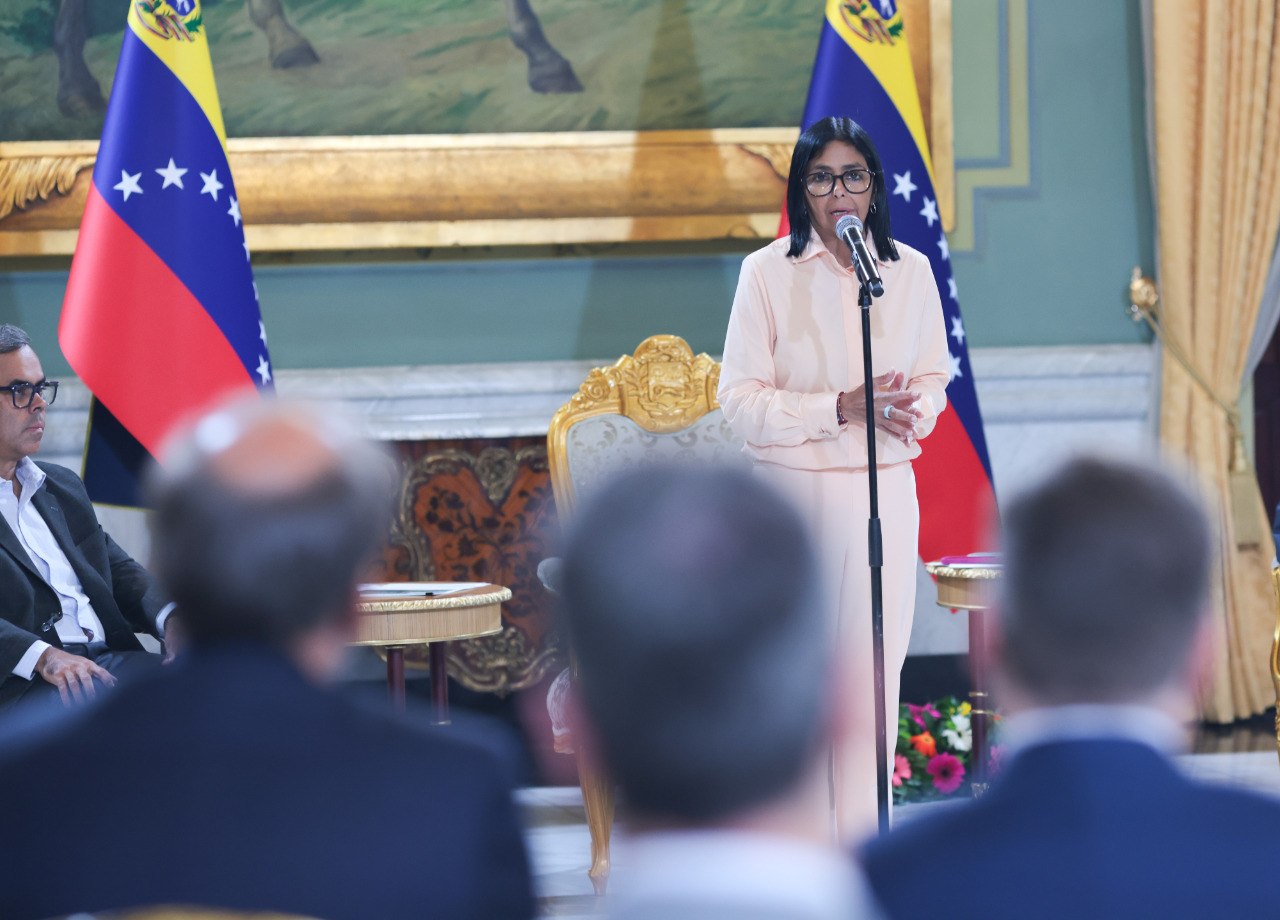
DOH brought together a powerful Latin American axis. This included the United Socialist Party of Venezuela (PSUV), the MST and many other social movements and parties from Colombia, Mexico, Guatemala, El Salvador, Argentina, Chile and elsewhere on the continent. Cuba and Venezuela both had a big presence.
The conference had a significant number of African participants, including movements and parties from French, Portuguese and English-speaking African regions. These included the Socialist Movement of Ghana, the Socialist Party of Zambia, the Socialist Revolutionary Workers Party (South Africa) as well as speakers from Tanzania and Senegal. In addition, there were many conference delegates representing groups in the Middle East and North African regions. Besides Palestine and Morocco, this also included Tunisia, Iraq, Kuwait and more.
An Axis of South Asian groups is another pillar of the IPA framework. Its Asia regional secretariat is based in Kathmandu, Nepal. This rests on strong collaboration between regional communist parties including the Communist Party of Nepal-United Socialist (CPN-US). The IPA also has strong links with the Workers Party of Bangladesh and the Workers and Peasants Party of Pakistan (MKP) – although neither were able to attend due to visa issues. There was also a Northeast Asian group including delegates from China and South Korea.
This was the first DOH conference to see significant representation from Southeast Asia and well as Australia. Besides two delegates from Red Ant Collective, this included delegates from the Labour Party of the Philippines (PM), the Socialist Union (PS – Indonesia), the Socialist Party (PS – a new formation in the Philippines) and the Socialist Party of Malaysia (PSM). The Socialist Party of Timor (PST) also sent greetings that were read out at the conference but was unable to send delegates due to delays in receiving passports from the Timor Leste government.
The Johannesburg Dilemmas of Humanity gathering followed a series of regional conferences from July to September in the Arab-Maghreb region, Sub-Saharan Africa, North America and Latin America and the Caribbean. In all, 800 people from 260 organizations and 51 countries took part in the regional conferences.

Forging Unity Through Practical Work
As the title suggests, the underlying conception and practical work of the conference was international collaboration to forge concrete solutions to the dilemmas facing humanity. To some extent this also refers to making headway in practical organising around the most pressing problems facing the world within the framework of capitalism and before socialist has been won.
That approach forms part of the strategic conception for how capitalism can be overthrown. That is, not through abstract propaganda but by practical organisation of mass initiatives and for reforms that strengthen the revolutionary struggle for socialism. The work of the MST in Brazil, in winning land reforms or other battles even within the framework of capitalist Brazil – is an important example.
Vijay Prashad, the director of the Tricontinental Institute for Social Research, argued that it is not true nothing can be done about hunger today, or until after the revolution – citing the Brazilian Workers Party government’s Bolsa Familia subsidy program as an example of a bourgeois government implementing meaningful reforms. Prashad told the conference that if you are not upset and motivated by the continuing presence of hunger in the world, you are not a revolutionary.
The major sessions at the conference were: Dilemmas of Humanity, Building Socialism Today, Organising the Working Class, Defending Life and Nature, Popular Democracy and Anti-Imperialism and National Sovereignty.
Minor sessions included: Food Sovereignty and Agroecology, Health, Immigrant Rights, Housing and Urban Struggle, Feminism and Struggles Against Patriarchy, Youth, Anti-Racism, Labour, Education, Art and Culture, and Science and Technology.
The major practical theme of the conference was solidarity with the Palestinian struggle, and international days of action called by the conference have already taken place.
International People’s Assembly
The IPA is a developing international network. On the one hand there are the affiliated national parties, social movements and other organisations such as institutes or think thanks. On the other, there are organisations that form the IPA organisational apparatus itself. The purpose of the latter is to link up with and support the development of national groups.
In this apparatus category are the Tricontinental Institute for Social Research, the People’s Dispatch and Globetrotter news services and the International Union of Left Publishers. There are also related local initiatives such as the People’s Forum in New York City. The IPA also has its own regional secretariats, the most significant being those in Kathmandu and Sao Paulo.
The IPA’s goal is not to declare a new communist or socialist international, and the leaderships emphasise avoiding the historical problems they identify as associated with communist international structures – especially the problem of a central organisation dictating to and standing above national leaderships. Rather, the approach is one of maximising practical unity through joint activities in critical areas of common agreement (anti-imperialism and for socialism). Discussion of differences is not the starting point.
This practical unity approach is seen as a key difference to the approach that eventually broke apart the World Social Forum process.
Rebuilding Popular Culture of Struggle
Another major emphasis of the conference was the critical need to struggle through the mediums of art and culture. The conference hosts, the South African National Metalworkers Union (NUMSA), made this aspect very immediate. Delegates were treated to regular and high doses of South Africa’s highly developed popular revolutionary culture – a legacy of the long struggle against the apartheid regime.
Whenever the energy level in the venue dropped, or there was just a brief delay, spontaneous singing would erupt bringing participants onto their feet – usually to dance. This would be initiated by NUMSA militants, including its general secretary, Irvin Jim. And the South Africans were not the only delegates belting out songs of historical struggles during conference sessions, rallies and rest breaks.
Nightly live shows were also dedicated to rebuilding people’s culture. Linqua Franca – a labour organiser based in Georgia, USA (who performed for the first time in Africa) – presented a mind-blowing set at one of these shows. Other sets, including from the renowned Johannesburg live music scene were not to be missed.
This was a far more powerful and international conference of socialists than anything held in Australia for several decades – or perhaps, ever. For anti-imperialist Marxists it was easy to feel at home among the delegates.
Coming from Australia – where anti-imperialist views became isolated on the left over the last two decades – it was easy to feel that in Johannesburg, we had found “our people”. The Dilemmas of Humanity framework was a big morale booster. The IPA framework seems a solid basis of collaboration for making headway on the big project of re-building anti-imperialist Marxism in this imperialist country.
[Sam King and Barry Healy attended the DOH conference as delegates for the Red Ant Collective.]

Leave a Reply