

For Lenin, the matter of imperialism must be approached in the first instance from the perspective of the world capitalist economy. The stated aim of Imperialism: The Highest Stage of Capitalism was to provide nothing less than ‘a composite picture of the world capitalist system in its international relationships at the beginning of the twentieth century.’
The idea here is this: if, as Lenin wrote in 1915, ‘the whole world is merging into a single economic organism,’ then it is necessary that capitalism be analysed on a planetary level, in terms of a world economy; for the dynamic of capitalism will play out on a global level, on the level of the whole, and not only on the level of each of its parts.
True, this can’t be all. For if Lenin’s goal was to give a “composite picture” of world capitalism then it is not obvious why he chose to name the structure brought into view by this picture “imperialism.”
By the term “imperialism” various phenomena are brought to mind: the administration of a politically subordinate region by an imperial metropole (colonialism), an aggressive move by one state against another (a military incursion, say), or simply the innate tendency of a state to broaden in borders, “expansion for expansion’s sake,” as the political theory of Hannah Arendt would have it.
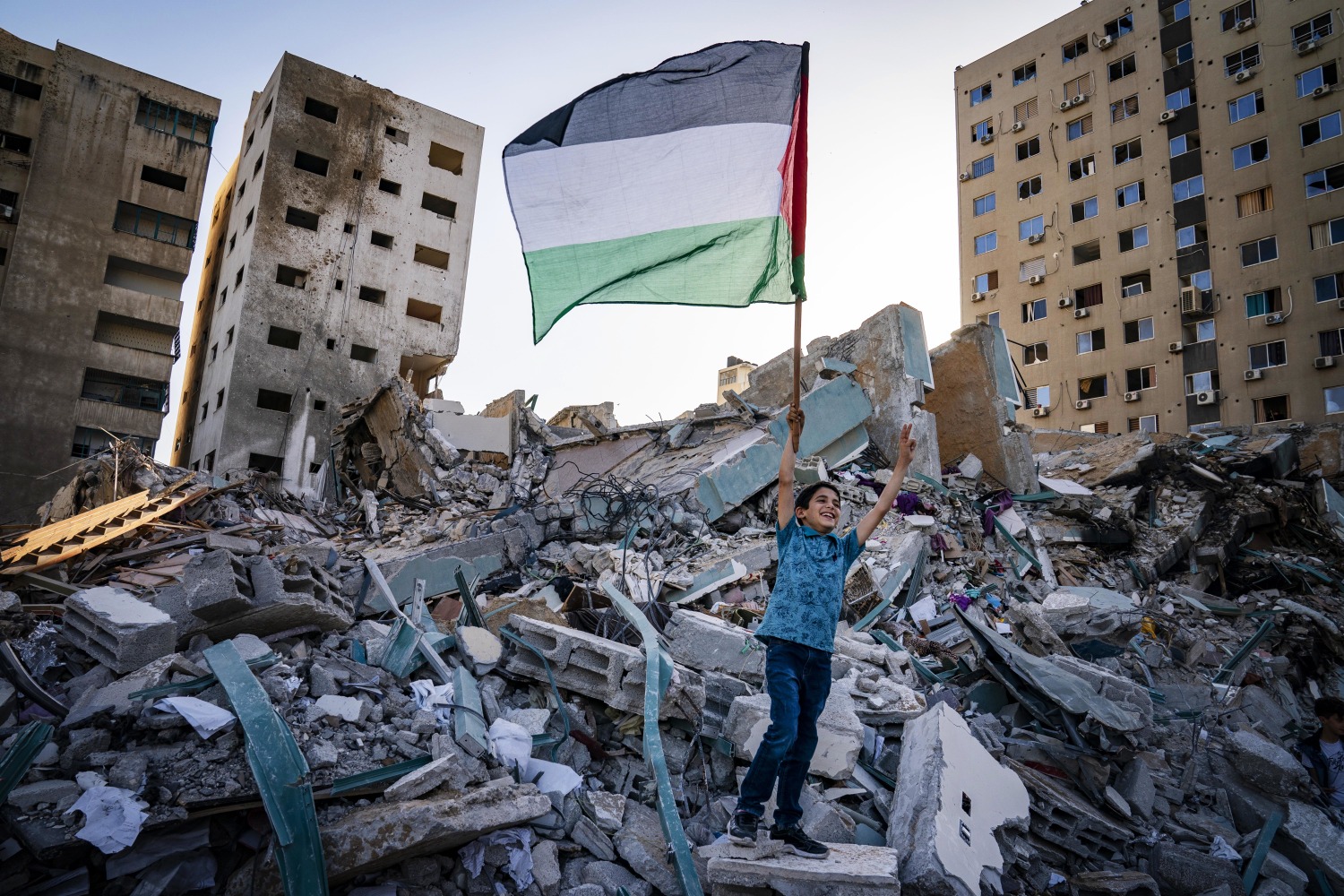
But it’s clear that Lenin took the term “imperialism” to denote something more specific. That is, for Lenin, this worldwide economic structure is imperialist because it is polarised, because it is divided into two regions: one that is oppressed and another that does the oppressing: ‘The characteristic feature of imperialism consists in the whole world, as we now see, being divided into a large number of oppressed nations and an insignificant number of oppressor nations.’
More precisely, those nations are oppressed because they are exploited: ‘imperialism is the exploitation of hundreds of millions by a handful of very rich nations.’ Is this any less true today, when the already massive disparities between our standard of living and the great many of humanity in the Global South are not only failing to shrink, but in fact growing, at the same time as world capitalism ferries innumerable commodities to us from across the planet by global “value chains”? We argue that it is not: although we say today that “imperialism is the exploitation of billions by a handful of very rich nations.”
But for Lenin the economic theory of imperialism was essential above all for the following reason: that, through it, every phenomenon of social and political life was rendered intelligible. In the concrete circumstances of his day this perspective—the perspective of the theory of imperialism—made it possible for Lenin to theorise: the connection between the emergence of monopoly capitalism on a world scale and the colonial division of the planet; the tendency of the “Great Powers” to war with one another; and the division of the working class into those super-exploited workers of the colonised countries and those, in the imperialist states, who received – were “bribed” – with a part of monopoly capital’s super-profits and were therefore the seed-bed for social chauvinism and “opportunism” (self interested reformism) in the class struggle.
The theory of imperialism was therefore not, for Lenin, pent up in the closet of “pure” theory; it was rather, in the words of Gyorgy Lukacs, ‘a guide-line for all concrete action’ and for that reason just as much a matter of practice. To understand imperialism was to begin to understand how to act.
These, then, are the tenets of Lenin’s anti-imperialist Marxism: to analyse capitalism in terms of a world economy; to come to grips with the stratification of the globe into those parts which are oppressed and those parts which are oppressors; to deduce from this economic structure the features of political and social-life; and, finally, in the words of Lukacs, ‘to make the transition from this theory to the concrete demands of the day,’ to reach ‘the culmination of all genuine theory … the point where it therefore breaks into practice.’


Leave a Reply