

Interview by Max Lane
The following is a slightly abridged interview with Herbert Docena, a central leader of Partido Sosyalista (PS). On Saturday February 27th 2024, PS was launched as a new above-ground socialist political party in the Philippines. Key documents and further information about PS are available here.
Over the coming months, Red Ant will publish other documents and interviews with socialist parties in the Asia Pacific Region.
Max Lane: There are several long standing left parties in the Philippines. Why do you feel a new party is needed?
Herbert Docena: Existing socialist or progressive parties in the Philippines have done much to advance the revolutionary cause in the country. They were at the forefront of the great struggles of the past decades, with many of their cadres sacrificing their lives in the fight against US imperialism, the Marcos dictatorship, the neoliberal onslaught, and so on.
Thanks to the mass mobilisation these parties have organised, many small reforms have also been won. Had these parties not existed, living conditions in the Philippines today would be even worse than they currently are. Through their efforts, the socialist banner continues to fly high. Many of us became socialists in part because of the inspiration the parties offered.
But a number of standing left parties have also made what we consider to be grave mistakes over the past decades. Among others, the ones that spring to mind include the purges which led to the deaths of thousands of left activists during the 1980s, the support for Rodrigo Duterte during the early years of his presidency, and the endorsement of a neoliberal opposition candidate over an openly socialist candidate from the working class in the 2022 elections.
In addition, some (by no means all) on the left have also insisted on perpetuating practices that we have found to be deeply problematic, if not altogether incompatible with the values and aspirations of the left. This includes being ultra-centralised or even downright authoritarian, having unaccountable leadership structures, being extremely “commandist” or intolerant of new initiatives and dissenting opinions, and so on. We have also been concerned with the tendency to tolerate – or at least not do more to counter – sexist, heteronormative, ableist, and other oppressive behaviour within their organisations.
Today, partly as a consequence of these mistakes, many existing left parties find themselves marginalised, unable to move forward and shift Philippine society towards a different path, despite the passion and idealism of their members. There are likely multiple factors behind this. Unrelenting and more organised state repression, together with the disorienting structural transformation of the Philippine economy, have certainly done much to weaken and disorganise the left in recent decades. But other, more subjective factors may also have played a key part here.
Some of us worked closely with or were previously part of some of the most dominant left parties in the country today, and we shared a common experience. Hoping to contribute towards reinvigorating the left, we pushed for new ways of thinking and of trying to change society, and we tried to introduce new ways of organising ourselves or relating to each other inside our organisations – but we ran into unyielding, sometimes even hostile, opposition. In all likelihood, unbending resistance to updated analysis in light of profound social changes, as well as vehement refusal to learn from mistakes, may also be part of the reason why many left parties in the Philippines committed the grave errors they committed in the past and find themselves hobbled today.
We don’t claim to be infallible or to have the best answers to the great questions the left faces today. But we decided to form a new party – after two long years of discussions – because we thought that only by doing so could we be free to do something we could otherwise not do, had we just decided to join or remain part of other left parties. That is, to test new hypotheses in the actual laboratory of struggle.
After careful examination of the evidence, we have concluded that Philippine society is no longer “semi-feudal,” not even “backward capitalist,” as others in the left still adamantly maintain. We also don’t think the Philippine state is still the rudimentary, exclusively repressive apparatus it may once have been, like Tsarist Russia or pre-revolutionary China – a premise others in the left still take for granted. For us, the dictatorship of the bourgeoisie has taken on new, more sophisticated forms and has built a complex belt of non-coercive, if still ultimately violent, defences.
And from these distinctive premises, we seek to try out a new revolutionary strategy. We don’t seek to “surround the cities from the countryside” through armed struggle or to foment an uprising in the city immediately. We hope to embark on a long march through the formidable institutions of modern Philippine society, carry out open, active, non-violent struggle aimed at first weakening the hegemony of the state and building an alternative hegemony of the working class and the oppressed.
It could be argued that in many ways this is what others on the left are already doing. But we think that, to the extent that this is true at all, it may be one of those cases where the practice sometimes runs ahead of the theory, giving rise to all sorts of contradictions and problems as theory tries to catch up with the practice.
Think of other left parties’ participation in the last Philippine elections. Many argued for supporting the neoliberal candidate instead of the socialist candidate in part because doing so was supposedly best for advancing the prospects of their ongoing guerrilla war or for realising their hopes for an urban insurrection – never mind if it narrowed instead of widened the working class’s political horizons, demobilising instead of mobilising them towards a progressive electoral insurgency at a crucial juncture in our struggle.
Though increasingly recognised as important, the struggle to build an alternative hegemony in the country is still often ultimately subordinated to the struggle to conquer and take over the repressive apparatus of the state in the country – something that has paradoxically undermined the left’s ability to achieve both goals.
It is possible, of course, that our experiments or our efforts to break with this problematic strategy will also not lead us to success, or at least we will meet many obstacles. What is certain is that we would have learned many important lessons along the way – lessons that all of the Left, including future generations, can learn from and hopefully enable them to strengthen their own organisations and the Left more broadly. Even just that would be a tremendous achievement, in our view.
We do believe that we have solid grounds for reaching the conclusions we have reached and for pursuing the strategy we seek to pursue. Now we must do the hard work of actually going out there, grounding ourselves in the downtrodden, and mobilising for revolution. At every step, we seek to be guided by the principle that the emancipation of the oppressed can only be the work of the oppressed themselves.
ML: How do you see the relation between your party and others already existing?
HD: We see the formation of our party as ultimately a reaffirmation of the fundamental values and aspirations of the radical left. Though we differ in how we want to go about achieving them, we share the commitment of many existing left parties to the goal of creating a more humane and more liberating society. As such, we see our decision to form a party not as a break with existing parties but as a way of forging closer ties with them by contributing to the advancement of our shared ultimate goals.
In line with this view, we are committed to working closely with existing parties to achieve common short-term and long-term objectives. As we do so, however, we will be guided by the principle that open constructive criticism of others on the left should not be avoided for the sake of maintaining harmony. Some perspectives and practices need to be challenged. We ourselves may need to be criticised and we welcome criticisms from others on the left. In our view, disagreements – and discussions of these disagreements – may be helpful for strengthening the left. We always start from Che Guevara’s view: “If you tremble with indignation at every injustice, then you are a comrade of mine…” But we add: even if we comrades disagree with each other, we should still work together while continuing to disagree with each other.
We seek the unity of all progressive and revolutionary forces in the country and in the world. But for us, unity does not necessarily mean we should all belong to one big monolithic and ultra-centralised party; it could also mean belonging to different autonomous groups, concentrating on different spheres or pursuing different strategies but in such a way as to reinforce rather than undermine each other’s efforts – a symphony orchestra rather than a group of musicians all playing their instruments together in the same tune.
As such, we are not closed to forming bigger coalitions and perhaps even merging with other left parties in the future should the conditions warrant this—indeed, we want to help create these very conditions. Whether we will do so and under what conditions we will do so will need to be decided democratically by the party. But at the moment, we will march separately from – but still alongside and in close coordination with – everyone seeking to end class exploitation and other forms of domination.
ML: Most PS members were actively campaigning in the last presidential elections. Can you explain your stances and activities? Did the PS emerge from your and others involvement in the Presidential campaign at that time of that campaign? What you see now as the main domestic issues for yourself and the rest of the broader left?
HD: Many of us agreed, along with many in the left, that one of the gravest threats – if not indeed the gravest threat – facing the left and the oppressed has been the resurgence and consolidation of authoritarian or fascistic forces in the country, as personified by the likes of the former president Rodrigo Duterte and the then presidential candidate Ferdinand Marcos Jr.
But unlike others in the left, we believed that the best way to address and counter this threat was not by rallying behind yet another supposedly more “winnable” pro-establishment and neoliberal candidate representing the political forces and social groups many among the masses have come to detest and repudiate – but by beginning the long, hard work of fielding our own openly socialist candidates from the working class, building the organisation needed to campaign for them, and using the elections to change the discourse, widen people’s horizons, and mobilise them towards socialist politics.
Then as now, we saw the elections not as a means to capture state power, in the misguided belief that it can be used to pile up reforms and build a road towards socialism, but as a means to raise consciousness and begin to help members of the oppressed become new kinds of political subjects – ones who are not only aware of their subjugation but are also opposed to being complicit in their own subjugation. In other words, we saw and we still see elections as a contradictory arena that can also be used to achieve collective empowerment and mobilisation – not towards the maintenance of existing institutions but towards subverting them and building the conditions for a very different political order.
We lost, and yet we won. The candidates we campaigned for gained just a tiny fraction of the vote but we were able to breach the boundaries of the national debate, introduce the idea of socialism to millions of people, and find more like-minded people that we can work with so as to build the ground for future, better-organised electoral campaigns and broader victories.
Partido Sosyalista came directly out of this bittersweet experience. Many of us were volunteers who didn’t know each other before the elections and then found ourselves reaching the same conclusions about the need to prepare and do better in the future. Many of us considered just joining existing parties, but after two years of discussion we decided it would be best to just form our own party, for reasons discussed above.
One of the biggest, if not the biggest, immediate challenge facing the left in the Philippines today, in our view, is the consolidation of the right or of the authoritarian, populist but ultimately conservative, anti-left forces in the country and across the world. Empowered and more organised, these forces are now pushing for what they could only dream of in the past, such as rewriting the Constitution and rolling back more progressive legislation concerning restrictions on monopoly capital, eroding civil liberties, and so on.
What is at stake, from our perspective, may be nothing less than the survival of the left as a political force. Given the attacks it has been subjected to and its own internal problems over the past decades, can the left still go on and grow to counter the forces of reaction and barbarism that seem to have been embraced even by many among the oppressed? Can we bounce back from defeat and begin to change the balance of forces? Or will we stay in operation – alive but forever marginalised? How do we capture the imagination or win back the confidence of everyone who is in chains? How do we forge a “collective will” out of the deepening anger and grievances of millions of atomised and isolated people? This is the great challenge facing us and the broader left today.
ML: How would you describe the PS’s version of socialism?
HD: Our version of socialism is not all that different from many other left parties’ version of socialism. We envision a society in which the means of production are collectively owned and democratically managed – a society in which there are no classes and in which there is no state and, hence, a society in which there is no exploitation and no domination. That said, we probably differ from other left parties in why we seek such a society, or at least in what we seek to emphasise as the main reason for why socialism is necessary.
For us, the goal is not merely redistribution or improved economic welfare for the poor; neither is the aim merely the achievement or exercise of sovereignty and the end of US imperialism. These are both important objectives, and we share them. But the larger goal for us, as for Marx and for others, is freedom – and freedom in the deeper sense. We seek to transcend the given, to be able to become better human beings, to be in control of our destiny rather than remain slaves to circumstance. We want everyone to have the means and the time to cultivate their rich and varied abilities and by so doing find meaning in their existence and to pursue happiness.
But in addition, we want to emphasise in our vision of socialism something that is not emphasised enough, in our view, by the left or even by Marx: the ability to care for others and to be cared for by others. We want everyone to have the means and the time to have quiet walks with their loved ones or by themselves for as long and as often as they need; to cook for their sick friends; to paint for their community; to grow a garden for their children; to help their ageing parents take a bath or walk down the stairs without constantly looking at their watches.
Beyond redistribution we also seek respect and recognition: that is, for everyone to be rendered visible in society – and to be accorded the respect and dignity everyone deserves but which so many people are deprived of in existing society. This is an integral part of caring for others. This is also why we seek a socialist society that is profoundly democratic rather than authoritarian: to deny others a voice in the community and control over their lives is ultimately to deny them respect and dignity and hence to ultimately deprive them of care. An inextricable part of the goal of collective self-actualisation in our vision of socialism is the goal of collective mutual care. Socialism is not just about us becoming better, more well-rounded human beings, it’s also about us becoming more caring human beings.
For us, then, a crucial precondition for realising this vision of socialism is thus also the abolition of all other forms of domination, such as the cis-hetero-patriarchy, racism, ableism, ageism, etc. We want to emphasise – against many in the left who still consciously or unconsciously hold a different view – that the struggle for women’s rights, or for LGBTQIA+ to be allowed to visit their dying partners, ought not to be, and need not be, subordinated to the struggle for the emancipation of workers. We firmly reject the view that the problems Queer people face are somehow “less important” compared to the problems workers face and, hence, ought to be relegated when it comes to prioritising how limited resources such as time and energy are to be allocated by the left.
For us, it is entirely possible that a classless and stateless society will nonetheless remain a heteronormative society in which gay people are treated as inferior beings and hence deprived of the respect and dignity, and therefore also the care, they deserve. Such a society may be described “socialist” but it is not the socialist society we dream of living in. We are a socialist party, our name bears the vision, but for us socialism means and requires much more than simply bringing down capitalism.
ML: How do you envisage change taking place?
HD: The kind of comprehensive social transformation we envision can only take place through sustained collective mobilisation from below. We take Frederick Douglass’ words to heart: “Power concedes nothing without a demand…if there is no struggle, there is no progress.” The dominant will not allow change to happen just because it’s a good idea; we reject the view that intellectuals can shake things up through their powers of persuasion. What really makes a difference is the oppressed resisting together, facing up to the violence of the mighty, withholding or threatening to withhold their consent for existing arrangements, struggling together to break their chains.
But this can only happen through collective consciousness-raising: a process that, in our view, does not simply happen through intellectuals instilling insight on the oppressed from outside, but through the oppressed developing the seeds of such insights derived from their own lived experiences, with the help of intellectuals, especially of those from their own ranks. This is where we see ourselves intervening as a party: we seek to contribute to helping foster the critical consciousness of the oppressed and organise ourselves for the goal of collective liberation, convinced that the emancipation of the oppressed can only take place through the actions of the oppressed themselves.
ML: What will be your main foci over the next one to two years?
HD: The last two years have been spent in long collective reflection and discussion on what binds us together in terms of how we view society and how we can change it. In the next two years, we will focus on building our capacity for sustained organising and mobilisation in the coming years.
Though decisions still need to be collectively made in the coming weeks on what exactly we will do, the following are some of the ideas that have been put on the table: to launch a mass recruitment drive, with a particular emphasis on drawing in more members from the working people and from the ranks of other oppressed groups, especially LGBTQIA+ groups and others; develop and finalise our Party’s internal and external educational program; improve our ability to reach out to more oppressed groups by beginning to build the foundations for a mass-circulation newspaper, magazine, or bulletin; enhance our capacity to conduct our own political research and analysis; to begin to form chapters in working-class neighbourhoods and workplaces; start preparations for electoral participation; begin intervening in public discourse by issuing statements and holding public activities on pressing issues; start laying the groundwork for sustainable mutual aid activities; enhance our ability to raise funds and gather resources independently; forge and deepen relations with comrades from abroad and begin to work with them on global campaigns; and so on.
ML: What is your relationship with the trade unions? And with students on campus?
HD: Though we have workers and students in our party, we currently still have no institutional relationship with trade unions and with student groups on campus. But this is a top priority for us in the coming years. In line with our goal of being grounded in the oppressed, we will focus on introducing ourselves to workers’ and other subordinated groups, building ties with their organisations, with a view to eventually help in the process of strengthening their self-organisation, by forming our own workers’ groups under certain conditions.
In the immediate future, we first seek to gain clarity on certain strategic choices, such as which specific sectors to prioritise if need be, which working-class communities we will organise in, and so on. Our goal is to ensure that we attract or work with not only working people, but especially those among them who suffer from multiple forms of oppression, such as women, Queer people, the disabled etc.
ML: Around the world there are international events being widely debated on the Left. These include: the US aggressive containment against China, the Palestinian situation, and the Ukraine situation. Does PS have positions on these issues? What do you see as the current biggest international challenges to the Left?
HD: For us the biggest international challenges facing the Left is the imperialist aggression being carried out by the United States and its allies; the expansionism of rising powers such as China or Russia, their intervention into the domestic affairs of countries like the Philippines, and, more broadly, the potential or actual rise of new empires or new forms of imperialism; and with this also the resurgence of right-wing or anti-left authoritarian, fascist, or fascistic forces worldwide.
Our Party Platform explicitly states the following: “We seek to end the global rule of the US empire and of transnational capital, to prevent the emergence of other empires or of new forms of imperialism, and to abolish racism and other forms of chauvinism so as to construct a new global order in which the oppressed are freed everywhere and in which all people are able to live in peace with each other and as part of nature.”
In line with this, the Platform also calls for:
- “terminat[ing] the country’s military alliance with the United States and abrogate all military treaties with it (MDT, VFA, MLSA, EDCA, etc.)”;
- “clos[ing] all US bases in the Philippines, demand the withdrawal of US forces in Asia,”;
- “oppos[ing] China’s annexation of maritime formations in the Philippines’ Exclusive Economic Zone, and promote a policy of demilitarising and denuclearising the South China Sea/West Philippine Sea”;
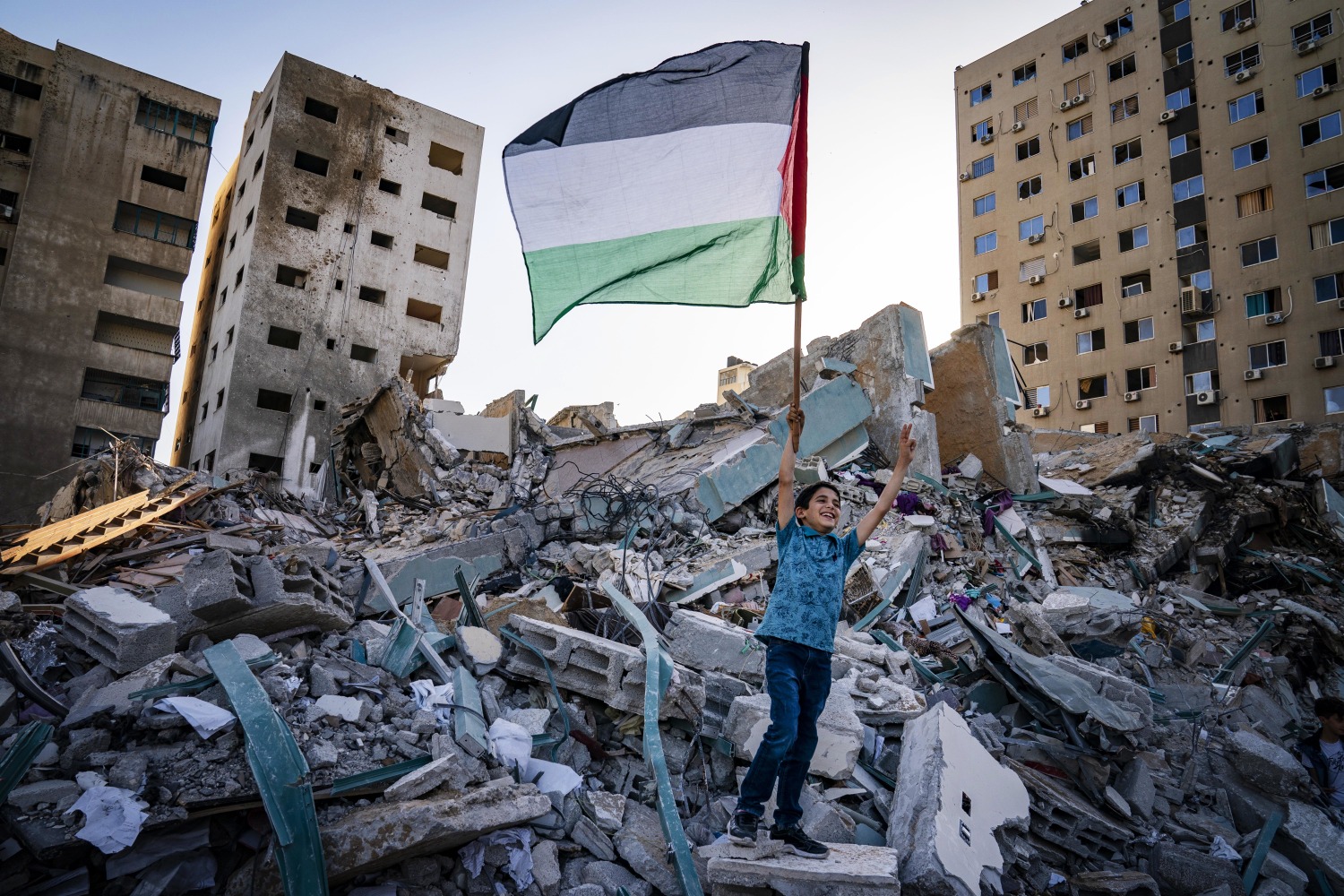
- “push[ing] for an end to the illegal occupation of Palestine and the genocide being perpetrated against Palestinians by Israel through boycotts, sanctions, and divestments and promote a solution that upholds the equal rights of all Arabs and Jews in Palestine/Israel”;
- “join[ing] efforts to bring all other occupations and colonial ventures to an end, and stand with those struggling for self-determination against imperialism, racism, gender oppression and other forms of domination”; among others.
In the coming years, we intend to carry out actions aimed at amplifying these calls and realising the objectives behind them.


Leave a Reply to The Brief History and Perspectives of the Socialist Party of Timor – RED ANTCancel reply