

Interview with RED ANT.
In this interview Asa Proletaryo from the Partido ng Manggagawang Pilipino (PMP) answered Red Ant’s questions on Filipino politics, from the role of the parliamentary party, Partido Manggagawa (PM), to questions of fundamental revolutionary strategy.
Asa Proletaryo explained that the PMP is a revolutionary proletarian party that aims to organise the class struggle of the working class from the democratic to the socialist stage. The founding chairperson of the PMP was Popoy Lagman, who was assassinated in 2001 by unknown assailants. The interview began with a question about the Partido Manggagawa (PM), a formation separate to the PMP.
Over the coming months, Red Ant will publish other documents and interviews with socialist parties in the Asia Pacific Region.
Red Ant: Activists on the Left in Australia are becoming familiar with the Partido Manggagawa (Labor Party – PM). How long has PM been around? What are its origins?
Asa Proletaryo: Partido Manggagawa (PM) was founded on February 12, 2001, on the very same day Filemon “Popoy” Lagman was buried. On the morning of that day, several hundred union and community leaders gathered at the UP Diliman Bahay ng Alumni to establish the PM as a working-class political party, an advocacy that Popoy had pursued since the split with the Maoist Communist Party of the Philippines (CPP).
He believed that workers needed an open political party that can extend their extra-parliamentary struggles into the parliamentary arena to take advantage of the bourgeois-democratic political conditions and at the same time expose its limits, therefore illuminating the necessity for revolution. Unfortunately, Popoy did not live to see the day of PM’s founding as he was assassinated on February 6, just a few weeks after the EDSA 2 regime change from Erap Estrada to Gloria Arroyo.
PM’s founding was the culmination of experiments to develop the socialist working-class movement’s parliamentary flank. Popoy Lagman’s ideas served as guide for this strategic shift, but obviously it took the practical skills of dozens of cadres and hundreds of activists for PM to be established. Before PM, in 1998, Sanlakas—a multisectoral movement but with the socialist working-class centre, BMP, at its backbone—competed and won in the party-list elections—an innovation at that time.
Rene Magtubo, a local union president of a tobacco factory, sat as parliamentary deputy for Sanlakas and broke ground on how the Left can use parliamentary struggle to facilitate organising, propaganda, and mass struggles outside the halls of Congress. Preparing the ground for the breakthrough of Sanlakas, and later PM, were alliances with progressive though bourgeois politicians in electoral contests in the mid to late 1990s. Popoy was criticised for being a reformist, but without that practical experience in understanding the lay of the land of electoral politics in the country, the successful experiments of Sanlakas and PM could not have been achieved.
Today, within the whole Left, it is taken for granted that electoral participation is a must. But it took Popoy’s practical genius and theoretical clarity to pave the way for this. Since the founding of the CPP, it took a position of boycotting “bourgeois elections” as the flip side of its principle of “armed struggle as the primary form.” But the positive outcomes of the revolutionary parliamentarism that Popoy advocated changed the minds of the leaders of the so-called national democratic movement in the Philippines. They participated in the party-list elections for the first time in 2001, after seeing the 1998 to 2001 experience of Sanlakas and other progressive party-list groups. These progressive party-list had former CPP members in their leaderships.
For now, none of these progressive party-list groups, including PM, are in parliament. Only the Makabayan bloc of the national democratic movement has deputies in parliament—a testament to their practical adaptation but also their theoretical vacuity. One cannot find any document explaining their shift from boycott to participation, certainly none that could match the thesis that Popoy wrote on the role of parliamentary struggle within the revolutionary struggle. Certainly, Popoy was not being original here, he merely reclaimed for the Philippine Left a tactic that the international communist movement had long practised, going back to the First, Second and Third Internationals.
There are several socialist and communist parties active in the Philippines. How do you see PM’s main differentiation with them?
PM is an open, working-class political party, not a revolutionary socialist organisation. It is not evenly openly socialist since it aspires to be a broad organisation that can inspire and encompass progressives within the working-class movement, some of whom are principled labour leaders, but who may not identify as socialist yet. Still, socialists, Marxists, and revolutionaries are embedded within PM.
In the Philippines, revolutionary and communist parties are necessarily underground. While communist parties are not banned by law, no serious communist will take the bait of operating openly given the impunity of security forces in the country.
In 1999, Popoy Lagman led the formation of the Partido ng Manggagawang Pilipino (PMP), or the Workers Party of the Philippines, to regroup the forces who split from the CPP but desired to rebuild the movement on a robust Marxist-Leninist foundation rooted in the concrete conditions of the Philippines. The PMP is founded on the 10 Theses that Popoy wrote, which were positive formulations that took off from the three counter-theses, which were written in the mid-1990s as a critique of the CPP’s key ideas.
The CPP is the biggest group on the Left. Yet its armed struggle remains stuck at a strategic defensive after more than 50 years of insurgency by the New People’s Army (NPA). The CPP doggedly persists in its strategy of protracted people’s war, its accompanying dogmatic analysis that the Philippines is a semi-feudal society whose population is comprised of 70% peasants, and its immediate aim of national democracy. Still, despite the disconnect between the CPP’s theoretical dogmas and its practical tactics, the national democratic movement has been able to adapt to the present political conditions by its pragmatic shift to parliamentary struggle.
However, without an anchor in a Leninist understanding of the possibilities and limits of revolutionary parliamentarism, the national democratic movement has repeatedly slid into class collaborationist tactics, such as supporting Gloria Arroyo—along with the reformist Akbayan—in the midst of an extra-constitutional regime change, or openly supporting the butcher Rodrigo Duterte in the early years of his term. The national democratic movement constantly reaped the fallout from its class collaborationism when Arroyo, and later Duterte, turned on it with extra-judicial killings of their activists and cadres using the full force of the state.
In contrast, the PMP argues that the Philippines is a capitalist society, as the transformation of the population into wage-labourers in various forms continues apace, despite the distortions and barriers presented by the dictates of imperialism. There are more than 29 million wage workers, comprising 63% of the labour force, compared to about 4 million peasants who work on land that they do not own, and another 4 million farmers. These farmers already own the land, but remain poor. They are confronted by a different set of issues, of a capitalist not feudalist nature.
Compared to the imperialist countries, which are advanced capitalist societies, the Philippines can only be described as backward capitalist. Based on the analysis of Philippine society, the PMP advocates socialism as its ultimate aim—organising and educating workers on anti-capitalism—even as bourgeois-democratic struggles remain as its immediate tasks. The PMP sets itself the task of principally organising the class struggle of the working class—formal and informal, urban and rural. Unlike the CPP which seeks to organise the struggle of the whole people, including an imaginary “national bourgeoise” which does not exist under neoliberal globalisation.
Further, in contrast to the CPP’s strategy of protracted people’s war, the PMP does not propose a revolutionary strategy, as there is no crystal ball by which to foresee and forecast the different tactics that will comprise the trajectory of a revolution from start to finish. The strategy of the PMP—if it can be called that—is in terms of content not form. That is, the PMP’s Leninist vision for the proletariat in the backward capitalist Philippine society is a continuing revolution from the democratic to the socialist.
Like the PMP, other socialist or communist groups in the Philippines trace their origins to the CPP split in the early 1990s. But without the clarity of Popoy’s critique, and an understanding of Marxism-Leninism in the light of the concrete revolutionary experience of the Philippines, they continue to be shackled by relics of the CPP’s dogmatic tradition.
Sonny Melencio, from Partido Lakas ng Masa, for example, continues his search for a revolutionary strategy to compete with the CPP’s protracted people’s war. At one point, it was a “mass struggle strategy”, which he counter-posed to Popoy’s “pragmatic politics” of electoral alliances with progressive politicians which he denounced as reformist. Then it was a “people power strategy” when the political conditions shifted. But if political strategies change with the conditions, then it is not properly a strategy anymore. Like the CPP, other revolutionary groups too orient themselves to organising the “whole people,” or the “peasants” or the “indigenous peoples” rather than setting themselves the task of principally organising the class struggle of the working-class.
Nonetheless, it must be clarified, the PMP does not claim to be the sole revolutionary group in the Philippines. The various groups that have split off the CPP—though not all as some have descended into being mercenaries— and including the CPP itself, are all revolutionaries. The PMP differs in its analysis and tactics with them, but all are part of the revolutionary movement in the country. Of course, all revolutionary parties—the PMP, the CPP and others—aspire to be the vanguard party, that is to lead the working class and the people in a victorious revolution to overthrow the rotten system. But being a vanguard is proven in practice and not proclaimed a priori.
From the 1960s to 1980s, the urban mass movement grew strong in The Philippines in opposition to the Marcos dictatorship. What has been the situation since the fall of the dictatorship and now?
Even before Marcos Sr., the father of the current Philippine president, imposed a dictatorship, the CPP declared the start of the armed struggle in 1969. The NPA immediately faced difficulties in copying Mao’s formula of a Red rural base before the declaration of martial law. But the armed struggle did take root in the early years of the dictatorship, as the reactionary armed forces were pre-occupied with pacifying the armed secessionist movement of the Moro National Liberation Front.
Within a few years of the dictatorship, the terror of martial law was broken by the onset of a workers’ strike wave in Metro Manila, that was precipitated by the fight in the factory called La Tondeña. This prefigured the rapid development of an urban mass movement of workers, students and urban poor.
As the dictatorship unravelled, armed struggle grew by leaps and bounds, as did the swift growth of a rural base among peasants and indigenous communities. But contrary to the CPP schema of the NPA, surrounding the cities from the countryside as the strategy to overthrow the dictatorship, the rapid maturation of an insurrectionary mood among the people finally led to the EDSA 1 people’s uprising, outstripping even the quick expansion of guerilla fronts and bases.
The CPP’s boycott—again premised on the principle that armed struggle is primary—of the 1986 snap elections that precipitated EDSA1, led to the Left’s marginalisation in the transition from “fascist” dictatorship to “trapo” (traditional politician) democracy in 1986. With the return of bourgeois democracy, the rug was slowly pulled from under the armed struggle, and thus ensued the secular decline in the strength of the NPA, and the CPP too.
The CPP, the hegemonic force within the Left during the period of open dictatorship, struggled under the new conditions of bourgeois democracy. Debates over the protracted people’s war strategy and adaptations to the new conditions—along with questions over the fall of actually-existing socialism — finally exploded into the split within the CPP. However, the failure of those party committees and groups which split from the CPP—called Rejectionists as opposed to the Reaffirmists which remained in the Maoist party—to form a united party debilitated the formation of a robust alternative revolutionary party. But despite such an organisational challenge, the Rejectionists, along with the Reaffirmists, faced major problems of responding to the changed political conditions.
First was the consolidation of bourgeois democracy after overcoming the internal crisis of the democratic transition. The latter was a tumultuous period of welgang bayans (peoples strikes) led by the still strong CPP and of coups by the rebel military. Oftentimes, the welgang bayans and the coup d’etats went hand-in-hand, though they were not coordinated. Yet, Cory Aquino survived the twin challenge of a militant mass movement and a mutinous military establishment, and in the process was able to strengthen a political system dominated by dynasties that are deeply entrenched in a patronage dynamic at the local level. The Left in the Philippines has not been able to chip away at this patronage system that preys upon the poverty of the masses and enmeshes them in a dependency relationship.
Second was the weakening of the working-class movement as a result of the onslaught of neoliberal economic restructuring. Unions fought a rearguard and losing battle against factory closures and relocations in the 1990s. The strongholds of unionism in Metro Manila and other cities—built in the crucible of the anti-dictatorship fight—collapsed. The defeats of the labour movement along with disillusion at the series of three uprisings which fell short of the promise of change (EDSA 1 in 1986, EDSA 2 and EDSA 3 in 2001) produced a mood of demoralisation among the working class.
So today, workers with grievances will not form a union and strike. They will not rely on their collective strength, but will seek the help of an outsider, such as one senator who at the moment has built a reputation for naming and shaming misbehaving capitalists on his TV show. This entrenched patronage system and a weak working-class movement are key contributors—but obviously not the sole factors—to the rise of authoritarian leaders like Duterte and Marcos, Jr., who were able to present themselves as saviours to a mass of discontented but atomised population.
How do you see the progress being made by the organised Socialist forces in the Philippines today?
Socialists and revolutionaries in the Philippines are battling to survive under the present conditions. Any keen observer of Philippines politics can see this. That socialists and revolutionaries were able to survive owes to the timely shifting gears of combining parliamentary struggle and extra-parliamentary mass struggles. And also, to the crisis of a broken political system that repeatedly erupts in violent intramurals among competing elite factions.
Today, it is the open brawl between the polvoron (referring to Marcos Jr.’s use of cocaine) and fentanyl (refering to Duterte’s favourite painkiller) dynasties which are the main ruling class factions. Previously, the extreme power plays were seen in Arroyo jailing Estrada, Noynoy Aquino incarcerating Arroyo in turn, and then Duterte imprisoning Senator de Lima, as examples of the extreme sports of elite infighting.
Disgust over the game of thrones among elite while the country burns in dire poverty and underdevelopment, the rise of authoritarian and misogynists like Duterte and Marcos, Jr., and inaction over the climate emergency threatening the planet’s survival does create the conditions for the development of socialist consciousness and a layer of new activists. But they are few in comparison to the population and the enormous tasks ahead. They come mostly from the ranks of students for now.
What are the specific challenges that the Marcos Jr electoral win poses for the Left? What social and economic issues are generating mobilisation and/or protests in The Philippines?
The victory of Marcos Jr. in the 2022 elections consolidates the turn to authoritarianism that Duterte started in 2016. While the regime of Marcos Jr. has interrupted the bloody war on drugs, killings of activists and the repression of movements persists. The state is intent on destroying the armed insurgency, and since it conflates the above-ground and underground movements, cadres and activists alike are fair play for harassment, arrest, abduction and summary execution. Capitalists are instrumentalising this climate of impunity by engaging in their own war against workers through union busting, union harassment and even murder of union organisers, such in the 2019 killing of Dennis Sequeña, PM’s veteran activist at the Cavite export zone, the biggest in the country.
Reversing the turn to authoritarianism and creating a space for social movements motivated PM to support the candidacy of Leni Robredo in 2022. She was definitely neoliberal in her platform, but she would have reversed the slide to democratic regression. The reinstitution of respect for basic guarantees of freedom of expression, freedom of assembly, and right to organise would enable the re-strengthening of social movements and mass struggles.
It is definitely not true that repression always fosters resistance. In a climate of political demoralisation and union decline, repression breeds fear and apathy instead. In contrast, repression during the Marcos dictatorship drove the fighting mood among the working class into the rise of a militant union movement, along with combative urban poor struggles in the cities, and peasant and farmer movements in the countryside.
As to be expected, the Marcos Jr. administration has no solution to the cost of living crisis that erupted as the country came out of the pandemic. This is generating dissatisfaction among the working-class and general population. However, latent discontent not being translated into open unrest as the demoralisation among the mass of workers is a heavy baggage on development of their consciousness. Thus, in the ongoing advocacy for a legislated wage hike, it is some bourgeois politicians, motivated by self-aggrandisement, who are the most vocal while the masses of workers remain inert and the labour movement as a whole unable to inspire combativity. Nonetheless, the issue of low wages and high prices are opening opportunities for renewing activism among formal and informal workers, as long as the Left can discover the appropriate calls and tactics to mobilise the more advanced layers of the working class.
The revived push to amend the Philippine constitution in the pursuit of further economic liberalisation and shifting to a parliamentary form of government is likewise creating stirrings among the middle class and a section of the elite. The kakampinks or the supporters of Robredo who retreated to inactivity after the electoral defeat, as well as new layers disgruntled at the current administration, may be revitalised in this campaign against charter change.
The convergence of economic advocacies over gut issues and the political campaign against charter change is a chance for the working class to take the lead in a renewed progressive opposition to the current regime. But this can only happen when masses of workers actually engage in struggles and put their class mark on a cross-class movement against the regime of Marcos Jr.
But it must be said, there is also a risk that workers are just used as cannon fodder in fight between liberals and authoritarians. But it is a gamble that socialists and revolutionaries must take. The Left cannot recover the initiative if it abstains from engaging in the real-life contradictions and contestations that drive Philippine politics.
What are the main issues of Global South solidarity that echo in The Philippines, on the Left and at mass level?
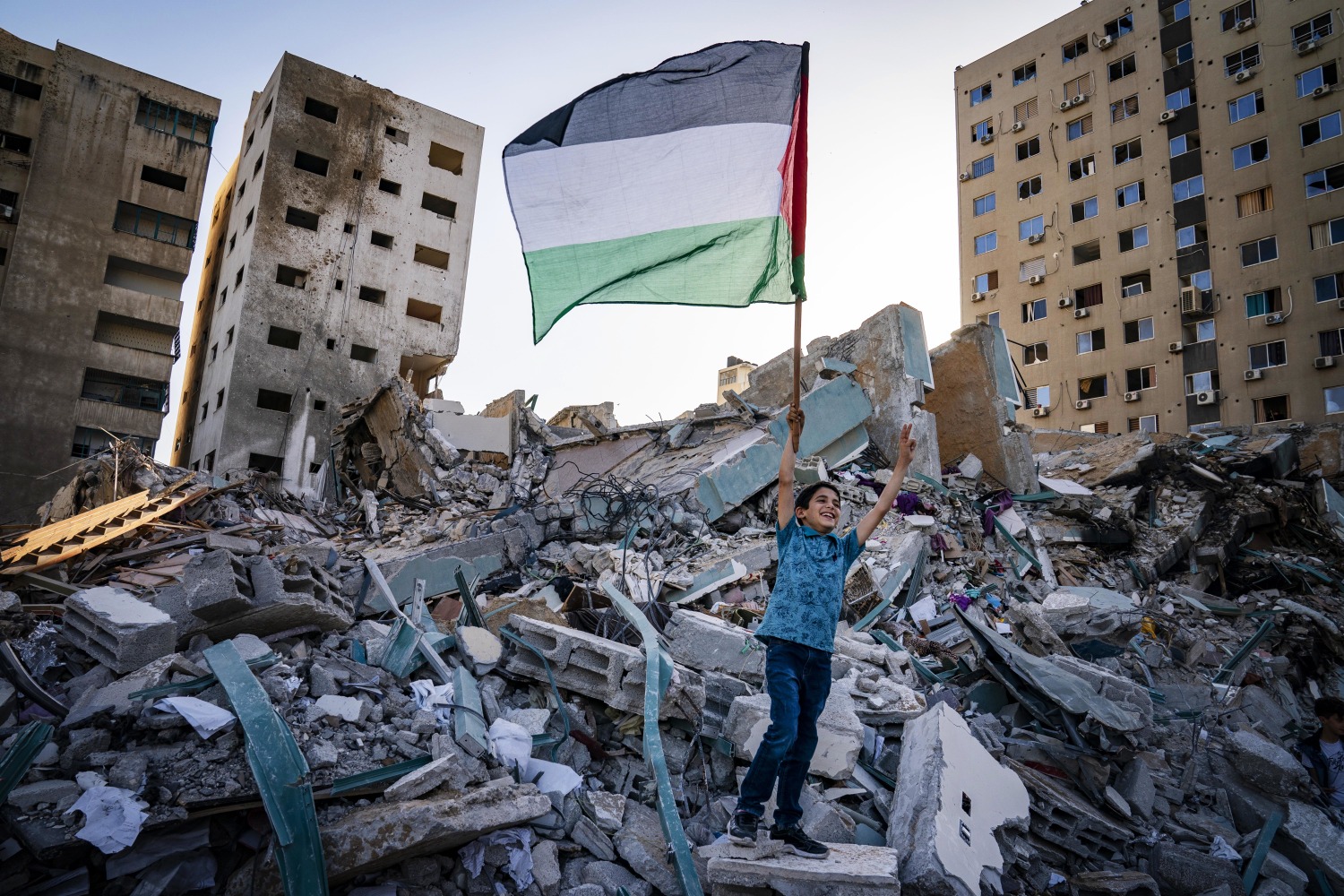
The new level of class consciousness of the working class in the Philippines militates against a more vibrant engagement in Global South solidarity. This is reflected in the muted response from the Left for solidarity with Palestine. While the different left groups have launched initiatives to express symbolic solidarity with the Palestinian people’s struggle in the face of genocide by the state of Israel, it pales in comparison to the spontaneous mass outpouring of street demonstrations in many countries, including in Southeast Asia. Objective (prejudice against Muslims) and subjective (left disunity) factors serve as barriers to a more robust international solidarity with sisters and brothers in Palestine.
Still, the Left does persist in engaging in solidarity. It is of course premised on an awareness of the international nature of imperialism, and thus of the need for a global struggle against capitalism. Likewise, many local and national campaigns are enabled by connecting with allies abroad. To cite one good example, international solidarity from unions and groups aided the fight of the union Philippine Airlines Employees Association (PALEA) in the early 2010’s. PALEA’s fight exhibited a two-way solidarity campaign. PALEA supported similar struggles against outsourcing by many airline unions at the period while groups abroad extended material and moral solidarity for PALEA.
There are many other such cases as the different Left groups, as well as social movements, in the Philippines are conscious of international dimension of local struggles in the era of neoliberal globalisation. There are struggles against mining in rural areas, against union busting in export zones, and for expansion of women’s and LGBT rights. Some of these are led by revolutionary groups, and aid in consolidating and expanding a layer of political activists. Others are led by NGOs and that of course does not necessarily end up in strengthening socialist or revolutionary groups.

Leave a Reply to The Brief History and Perspectives of the Socialist Party of Timor – RED ANTCancel reply