
Opinion by Marcus Pabian
The death of Charlie Kirk on 10 September was a political assassination. Working out which political position motivated the assassin is difficult as some of Kirk’s political thinking was changing, most notably on Palestine as investigated by The Grayzone. What is disturbing among parts of the left is a permissive culture of celebration.
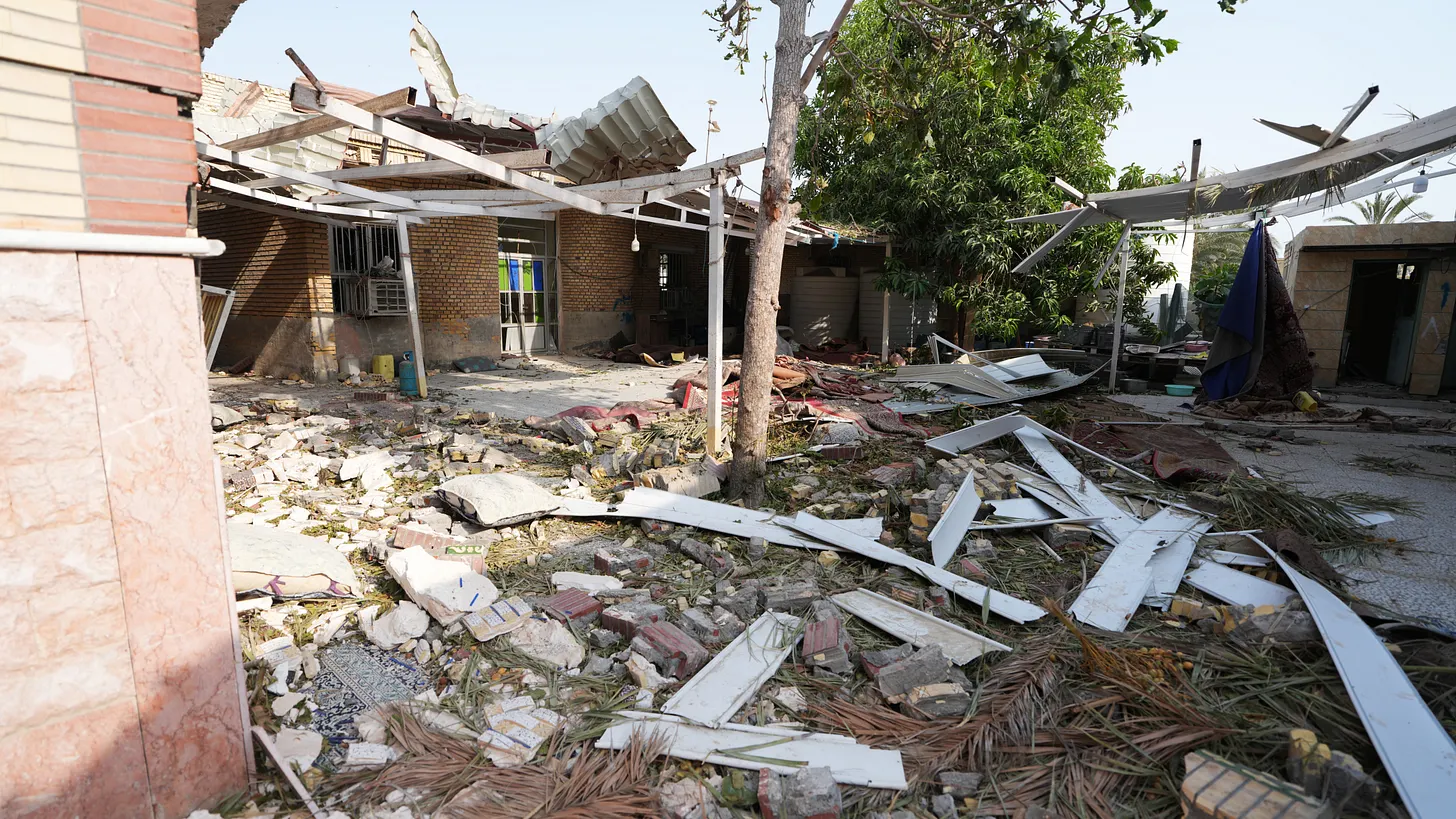
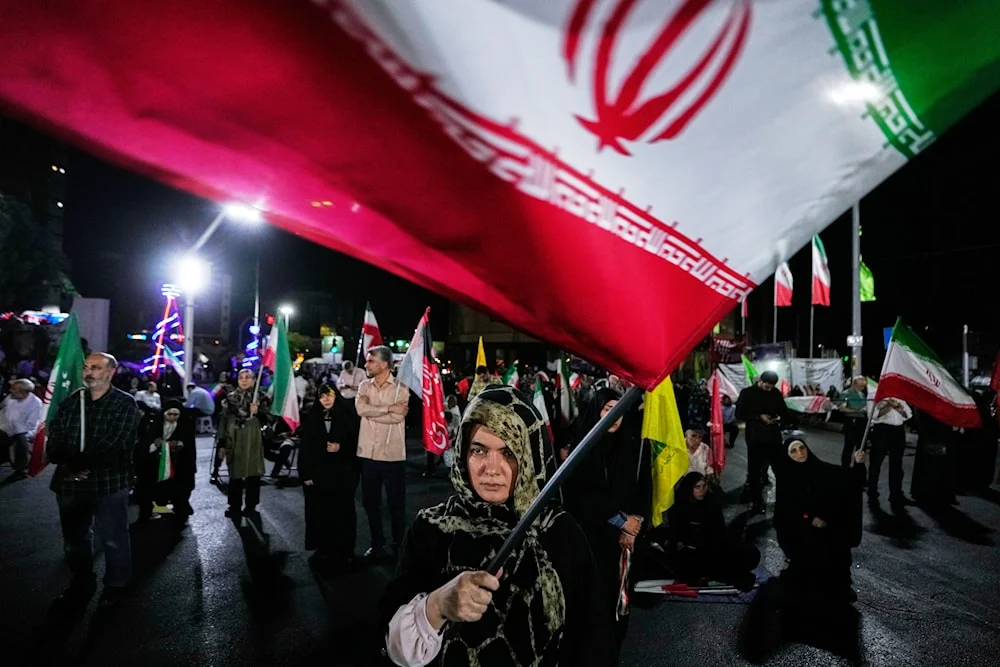
A frightening number of political assassinations have been carried out in recent years. Some have survived; many have not. Many of these have been carried out by States. For example, the Prime Minister of Yemen, Ahmed al-Rahawi, was killed in an Israeli airstrike on 28 August; while the Iranian President, Masoud Pezeshkian, narrowly escaped an Israeli bomb in June. Both countries have actively supported the Free Palestine campaign. While Charlie Kirk was not an elected government official the political character of his assassination stems from him being a founder and leader of the conservative youth organisation Turning Point USA, whose 850 university chapters promote Republican candidates.
The use of force can at times be legitimately sanctioned by the left. In 1999 significant numbers on the left in Australia initiated a successful mass mobilisation campaign calling for Australian troops to be deployed to East Timor in the wake of its independence referendum. The purpose of the military force was to defend the 78.5 percent of people who voted in favour of independence from massacres being carried out against them by squads armed by the Indonesian military with which Australia had close historical ties. This is an expression of defensive armed force which had the effect of ending a mass terror campaign against a population. It is completely at odds with the assassination of Charlie Kirk which was itself an act of political terrorism.
For those people on the left who may think that such an assassination is a deserved, justified, politically expedient or ironic act: history has another story to tell. Serious consideration should be given to a period called the Years of Lead (1960s-1980s) in Italy. Both right and left organisations conducted assassinations and other acts of terrorism over roughly 15 years from the 1960s to the 1980s killing 428 people and injuring thousands. The result was not some great victory on either side but rather the widespread intimidation of people from openly participating in politics, deepening the divide between people and defaulting power to the incumbent system. The Years of Lead present a stark contrast to the left-wing pursuit of mass organisation and mobilisation of working people into the political life of their country.
Such effects are borne out by a study in the journal CTC Sentinel of the Combatting Terrorism Center based at the West Point US military academy. In the January 2015 edition Dr. Arie Perliger, at the time an associate professor of social sciences at the academy, analysed 758 political assassinations from the year 1946 to 2013. Perlinger found two general trends that were most likely to be observed following political assassinations. The first was that political participation by the population declined, while the second showed a disproportionate strengthening of “the executive branch” of the government. This was also the effect of the 9/11 terrorist attacks in the United States which played a pivotal role in creating a climate for the demobilisation and defeat of the powerful anti-corporate globalisation movement which existed at that time. It brought forward a whole period of increased state repression in the form of “anti-terror” legislation that restricted free speech, and US-led foreign wars of aggression, in which Australia also participated.
Awareness of the detrimental effect of acts of political terrorism on popular social movements is not an insight which is particularly new or unique to the post-World War II period. One of the founding principles of Russian Marxism was a rejection of individual terrorism as a strategy – something which had characterised pre-Marxist Russian radicalism. Vladimir Lenin’s older brother, Aleksandr Ulyanov, was hanged for participation in a plot to assassinate Czar Alexander III of Russia. This strategy was rejected by all factions of Russian Marxism as detrimental to the task of bringing the real power – the working class – into political struggle.
The political assassination of Charlie Kirk was not a defensive act but an act of political terrorism which undermines free speech by intimidating all people who want to openly organise and discuss political ideas. It opens the possibility of reprisals, including against leftists, merely accused of responsibility for this or future assassinations. The possibilities for US state agencies – such as the FBI or other three letter agencies – to throw petrol on the fire through undercover operations, including further assassinations, is obvious. Even if a further escalation of assassinations does not occur inside the US, Kirk’s murder will once again help to justify increased police powers, repression, surveillance and others forms of control by the capitalist state – simply galvanising the system we challenge.
Relishing Kirk’s assassination is more than cringe, it demonstrates a lack of historical perspective. Such a simplistic reaction may seem rational to some critics. But for those who are involved in trying to organise people into struggle, who are also likely to be on the frontline of reprisals, Kirk’s assassination does nothing to tip the balance in our favour – it worsens it.
Marcus Pabian is a friend of Red Spark, with an interest in social change and Marxist politics.
Further reading:
Blumenthal, M., and Parampil, A. (2025) Charlie Kirk refused Netanyahu funding offer, was ‘frightened’ by pro-Israel forces before death, friend reveals. Grayzone. Available at: https://thegrayzone.com/2025/09/12/charlie-kirk-netanyahu-israel-assassination/
Perliger, A. (2015). The Causes and Impact of Political Assassinations. CTC Sentinel, 8(1), 11-14. https://ciaotest.cc.columbia.edu/journals/cs/v8i1/index.html
CTEC Staff. (2022) Italian Neofascism and the Years of Lead: A Closer Look at the Nuclei Armati Rivoluzionari. Middlebury Institute of International Studies at Monterey. Available at: https://www.middlebury.edu/institute/academics/centers-initiatives/ctec/ctec-publications/italian-neofascism-and-years-lead-closer-look


Leave a Reply