

Tantura
Documentary film by Alon Schwarz
On streaming services
“A report on the banality of evil” was the sub-title of Hannah Arendt’s famous 1963 book, Eichmann in Jerusalem. The book was a philosophical investigation of the trial conducted by the Israeli state of the Nazi mass murderer, Adolf Eichmann.
Eichmann was responsible for one of the most efficient World War II deportations of Jews to the gas chambers, the three-week long round-up and mass transportation in Hungary.
Arendt believed Eichmann’s defence testimony that he was just following orders, he was just a cog in a larger machine. So, she examined how an ordinary, even banal person could come to perform unspeakable acts.
Unfortunately, as demonstrated in Bettina Stangneth’s 2011 Eichmann Before Jerusalem: The Unexamined Life of a Mass Murderer Eichmann was lying in court. He was trying the save his miserable hide and Arendt was naive to accept his testimony.
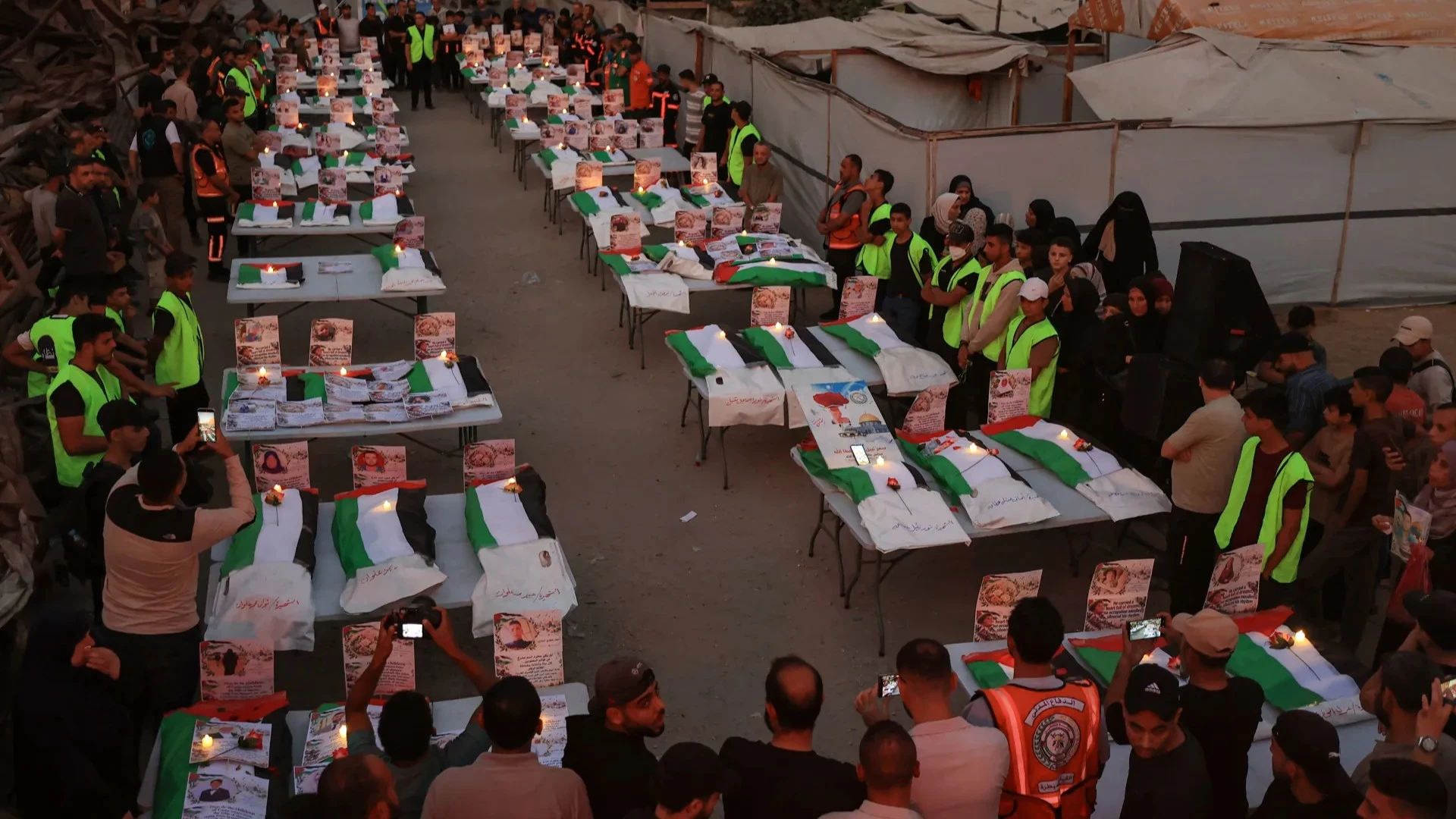
The film examines the mass murder of Palestinians in the fishing village of Tantura in 1948 and shows the murderers dissimulating in the same manner as Eichmann.
The same banality, dishonesty, culpability and murderousness as Eichmann’s is exhibited in Tantura. It shows how naïve it is to accept the myth that Israel was established heroically, that the Palestinian population simply ran away and allowed Zionists to occupy their land.
The hinge of the story is that of Teddy Katz, who in the 1990s completed a Masters thesis based on oral testimonies that he collected from hundreds of witnesses to the 1948 events. He interviewed both Palestinians and veterans of the Israeli Defence Force’s Alexandroni Brigade.
He was awarded his degree and all was well until the right-wing newspaper, Ma’ariv, ran an attack article about it. Alexandroni Brigade veterans sued for defamation, even though they had admitted to war crimes on tape.
So, the story involves the drama of a court case and high-level cover-ups.
Filmmaker Alon Schwarz gently unfolds his case before the viewer, allowing for the jig-saw of evidence to form into a damning account of massacre and deliberate historical forgetting. We hear the tapes and interviews with many of the aged veterans today.
“There were many Arab casualties, and they were scattered, like garbage,” says one witness. “It’s forbidden to tell,” says another awkwardly, while smiling.
Stories emerge of rape and cold-blooded murder, which are all attributed to one, lone IDF soldier. Several soldiers recount in detail the morning assault on the village and relaxing afterwards but claim they can’t recall anything that happened in between.
Historical evidence and contemporaneous film are matched with the stories, as is aerial photography searching for evidence of a mass grave.
Does Tantura manage to nail its case?
Attempts by the Jerusalem Times reviewer to damn the movie are telling: “The message Schwarz hopes to convey, both from the film’s content and his statements about it in the press, is that it is incumbent on Israeli society to recognize the inherent truth in Palestinian claims that a “nakba,” or catastrophe, occurred with the foundation of the state. However, the film failed in that mission.”
The Jerusalem Times simply confirms what Israeli historian Ilan Pappe, who has written extensively about Al Nakba, says: “I think the self-image of Israel as a moral society is something I haven’t seen anywhere else in the world. We are the ‘Chosen People.’ This is part of the Israeli self-identification. And I think it’s very hard for Israelis to admit that they commit war crimes. Because basically, the project of Zionism has a problem…You cannot create a safe haven by creating a catastrophe for other people.”
+++
Webinar featuring Ilan Pappe about the Tantura massacre:
Documentary Trailer:
–




Leave a Reply